
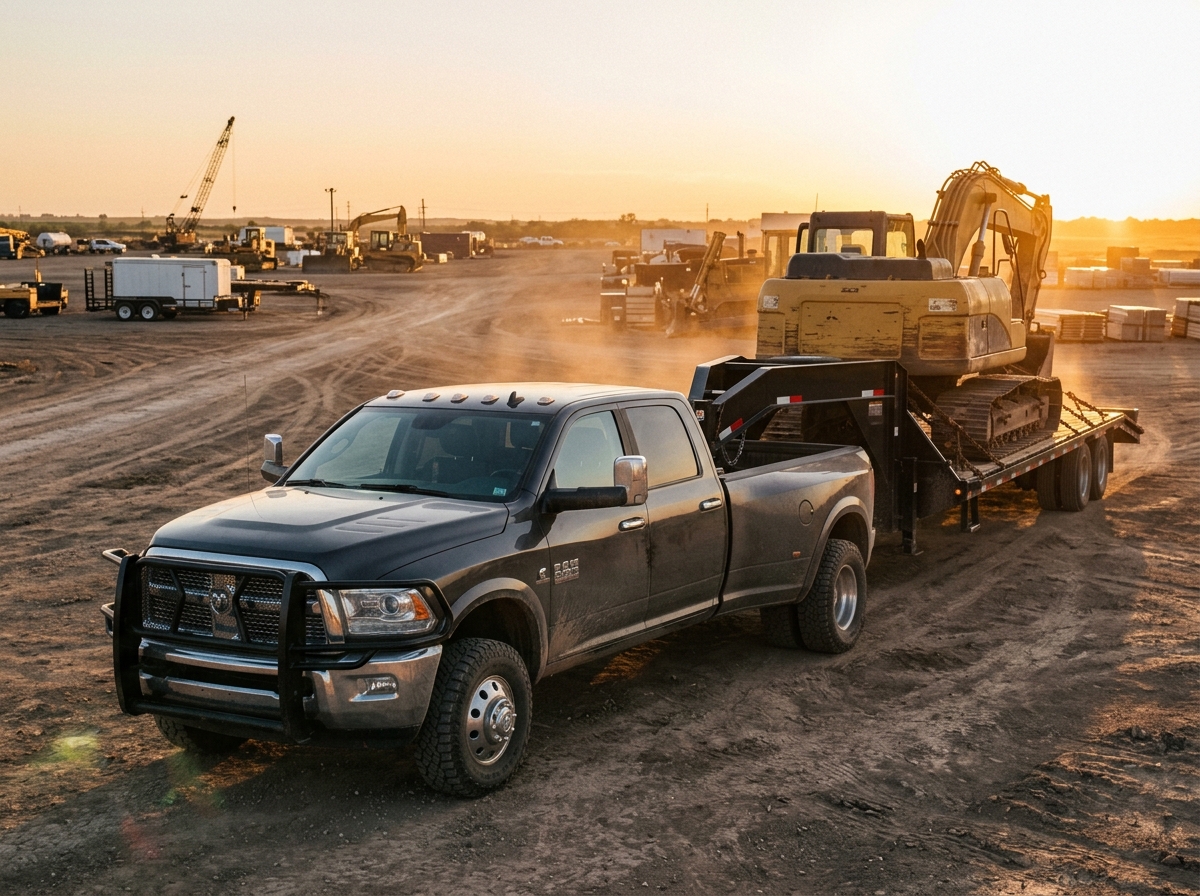
Choosing a heavy-duty diesel truck starts with understanding the work it needs to handle. Towing a large trailer, hauling equipment, transporting materials, or traveling long distances under load can place very different demands on a truck. Buyers should consider trailer weight, payload, hitch type, road conditions, cab configuration, and how frequently the truck will operate near its limits. Looking beyond maximum ratings can help ensure the truck remains practical for both demanding jobs and everyday driving.
Engine choice is another important part of the decision. Discussions such as Powerstroke vs Cummins can be useful when comparing diesel platforms, but the right choice depends on the truck’s configuration, maintenance history, towing requirements, and intended workload. Buyers should also evaluate transmission performance, axle ratios, cooling systems, braking capability, fuel costs, and available service support. Matching these factors to actual needs can make it easier to select a heavy-duty diesel truck that provides dependable capability without paying for features or capacity that will rarely be used.
Start With The Workload
Write down what the truck must do in an ordinary month. Include weekly mileage, loaded trailer weight, bed cargo, passengers, job-site terrain, highway grades, and whether you need four-wheel drive. A contractor carrying tools every day may prioritize payload and bed access. A camper owner may need a stable fifth-wheel setup. A rancher may value traction and durability on unpaved roads, while a long-distance commuter may put more weight on ride quality and operating cost.
Do not buy solely for the rarest, heaviest job unless that job is frequent or essential. Extra size can lead to real compromises, including a wider turning circle, greater parking difficulty, more expensive tires, and less convenient daily use.
Separate Towing Capacity From Payload
Towing capacity is the maximum trailer weight the manufacturer permits for a specific configuration. Payload is the weight the truck can carry in and on itself. Gross Vehicle Weight Rating, or GVWR, is the truck’s maximum loaded weight. Gross Axle Weight Rating, or GAWR, limits the weight placed on each axle. Gross Combined Weight Rating, or GCWR, limits the loaded truck-and-trailer combination.
Payload is often the constraint buyers overlook. People, tools, a hitch, auxiliary equipment, bed cargo, and trailer tongue or fifth-wheel pin weight all count toward payload. Federal guidance on trailer brakes, tow balls, safety chains, and breakaway devices also reinforces the importance of staying within the vehicle’s labeled weight limits.
For example, a travel trailer may be within a truck’s tow rating but still place enough tongue weight on the truck to leave little room for a family, a cooler, a toolbox, and a generator. Check the payload label on the driver-side door jamb and use the towing guide for the exact cab, bed, drivetrain, axle ratio, and equipment package.
Choose An Engine For The Driving Pattern
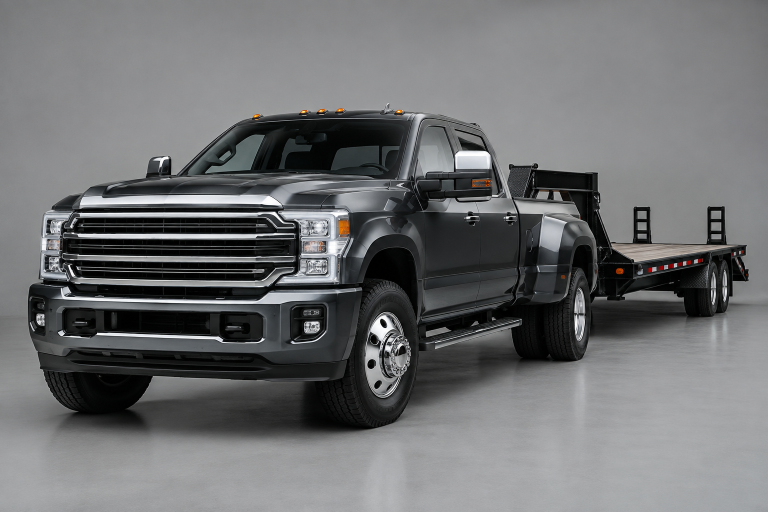
Diesel engines are well-suited to frequent heavy towing, sustained highway travel, and drivers who value a strong low-speed pulling force. A gasoline engine can be the more sensible choice for lighter trailers, shorter trips, lower yearly mileage, or buyers who want a lower initial purchase price.
Modern diesels also use emissions-control equipment and diesel exhaust fluid. Repeated short trips may not give the system the operating conditions it needs as consistently as longer drives do. Consider local service options, fuel availability, transmission behavior while towing, and the likely maintenance costs before deciding that diesel is automatically necessary.
Pick The Right Truck Configuration
Cab, bed, drivetrain, and rear-wheel setup matter as much as the engine. A regular cab can provide a long bed in a shorter overall package, while a crew cab adds passenger space but lengthens the truck. Long beds are useful for work cargo and are commonly preferred for fifth-wheel towing, but they require more room to maneuver.
Four-wheel drive can be valuable on snow, mud, loose job sites, and boat ramps, though it adds weight. Single-rear-wheel trucks are easier to live with every day. Dual-rear-wheel trucks can offer greater stability and capacity for certain heavy towing applications, but they are wider and require more attention in narrow lanes and parking areas. Luxury trim, larger wheels, toolboxes, lifts, and aftermarket accessories can reduce available payload.
Consider Daily Driving Comfort
If the truck will also commute, test it where you actually drive. Evaluate seat support, visibility, steering effort, ride quality, cab entry, rear-seat space, camera views, and mirror adjustment. Drive city streets, highway ramps, narrow roads, and a tight parking area if possible.
A buyer who tows a large camper on weekends but works downtown during the week may prefer a capable single-rear-wheel truck with useful parking aids over a larger configuration that is unnecessarily difficult to place in a garage or crowded lot.
Calculate The Full Ownership Cost
Purchase price is only the beginning. Include insurance, registration, fuel, tires, brakes, scheduled service, repairs, and the cost of downtime if the truck supports your business. Diesel ownership may also involve larger oil capacities, fuel filters, DEF, cooling-system service, and emissions-related repairs over the life of the truck.
Estimate annual miles and loaded towing miles, then compare likely fuel use rather than assuming one powertrain will always save money. The Department of Energy’s vehicle comparison tools for medium- and heavy-duty models can help buyers review available fuel and vehicle information alongside manufacturer specifications.
Inspect A Used Diesel Truck Carefully
Service history matters more than mileage alone. Review records for oil and filter changes, fuel-system maintenance, transmission service, cooling-system work, and repairs to emissions equipment. Inspect the hitch, frame, suspension, tires, brakes, and wiring for evidence of hard use or poor-quality modifications.
During a cold start and road test, watch for warning lights, hard starting, fluid leaks, unusual exhaust behavior, inconsistent idle quality, drivetrain noise, and harsh or delayed shifts. An independent pre-purchase inspection is especially worthwhile for high-mileage, heavily modified, or frequently towed trucks.
Use A Practical Test-Drive Checklist
- Adjust the seat, wheel, mirrors, and cameras to confirm clear sightlines.
- Test acceleration, braking, steering response, and transmission shifts.
- Listen for suspension knocks, axle noise, vibration, or unusual engine sounds.
- Check the bed height, hitch visibility, rear-seat access, and trailer-mirror coverage.
- Drive an incline when possible to assess power delivery and braking confidence.
- Confirm that the truck fits your garage, driveway, work site, and usual parking spaces.
Make The Choice Based On Real Use
The best heavy-duty diesel truck is the one that handles your normal workload with adequate payload, trailer capacity, and a sensible reserve. Compare exact configurations, verify every rating on the truck itself, and account for comfort and ownership costs. A well-matched truck should work hard when needed without becoming a burden every other day.