
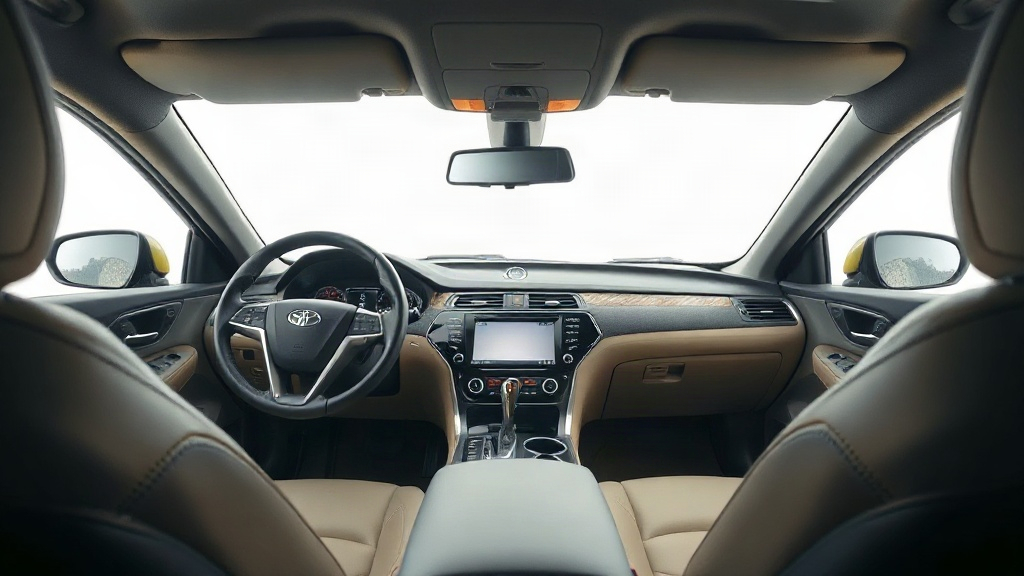
Car safety features every driver should know about fall into two groups: systems that help you avoid a crash and systems that protect you when one happens. Modern vehicles carry both, yet many drivers never learn what the dashboard lights mean or how the technology behaves in poor weather. This guide explains the features that matter most, how each one works, and the habits that keep them effective. For a marketplace perspective on safety-rated vehicles and their equipment, Vehicle Trade US is a useful reference point.
Quick answer: Learn what your car’s active systems (automatic emergency braking, lane keeping, blind spot monitoring) and passive systems (airbags, seat belts, crumple zones) actually do. Read the owner’s manual for your specific model, test each feature in safe conditions, and never treat any one system as a substitute for attention. Correct seating position and tire condition still matter more than most electronics.
What is car safety features every driver should?
The question sounds broad, so start with a simple split. Active safety features work before a crash by preventing it. Passive safety features work during a crash by reducing injury. Every driver should be able to name the main examples of each in their own vehicle.
Active safety features that prevent crashes
- Automatic emergency braking (AEB): uses radar or cameras to detect an imminent collision and brakes if the driver does not respond in time. Many systems also detect pedestrians and cyclists.
- Forward collision warning: alerts you before AEB intervenes, usually with a chime and a visual alert.
- Lane departure warning and lane keeping assist: warn when you drift across a marked line; some systems gently steer you back.
- Blind spot monitoring: lights up a warning in the side mirror when a vehicle sits in your blind zone.
- Rear cross-traffic alert: warns of approaching traffic when you reverse out of a parking space.
- Electronic stability control (ESC): brakes individual wheels to correct a skid. It has been mandatory on new cars in the United States since 2012.
- Adaptive cruise control: maintains a set gap to the car ahead, braking and accelerating as traffic changes.
Passive safety features that reduce injury
Seat belts and pretensioners, front and side airbags, head restraints, and the body structure itself — crumple zones that absorb energy while the passenger cell stays rigid — all fall here. Tire pressure monitoring systems and backup cameras sit somewhere in between, warning or assisting rather than protecting.
How to learn what your car actually has
Feature names vary by manufacturer, and optional packages mean two cars of the same model can differ sharply. Open the owner’s manual and locate the safety section, then check the window sticker or a VIN-based equipment lookup. Confirm whether a feature is standard, optional, or absent before you rely on it.
Cameras and radar need a clear view. Dirt, snow, stickers, or a cracked windshield can disable lane keeping or AEB without an obvious warning beyond a dashboard message.
Takeaway: know your car’s active and passive systems by name, and confirm what is fitted rather than assuming.
Why car safety features every driver should matters
Electronic aids reduce the chance of a crash and the severity of one, but only when the driver understands their limits. That gap between capability and understanding is where risk hides.
How safety systems change crash outcomes
ESC alone helps drivers keep control in a swerve or on a wet curve, situations where human reflexes often fail. AEB can cut the impact speed in low-speed rear-end collisions, which reduces both injury and repair cost. These systems are engineered for the moments when attention lapses for a second. That is common: reaching for a dropped phone, glancing at a sign, checking a mirror a beat too long.
Where the limits sit
No system is a substitute for the driver. Camera-based features struggle in heavy rain, fog, low sun, or when lane markings are worn. Radar can be confused by certain metal structures or tight curves. Pedestrian detection may not recognize someone in dark clothing at night. Hot asphalt and darkness affect every sensor differently.
Feature terminology also oversells. A car marketed as having “autopilot” or “full self-driving” still requires an attentive driver who is ready to brake. Treat marketing language as a label, not a promise.
The maintenance side of safety
A worn tire with 2 mm of tread stops far longer on wet pavement than a fresh one. Brake fluid absorbs moisture over time and degrades pedal feel. A dirty windshield camera can quietly switch features off. Each of these weakens electronics that the driver assumes are working.
Takeaway: safety features matter most when paired with maintenance, realistic expectations, and a driver who stays switched on.
Best practices
Good habits multiply the value of every system in the car. Work through these in order.
Set up the driving position first
Sit so your wrists rest on top of the steering wheel with your shoulders against the seat back. Keep at least 10 inches between your chest and the wheel — closer than that puts you in the path of a deploying airbag. Adjust the head restraint so its center aligns with the top of your ears.
Learn each feature in calm conditions
Test lane keeping on an empty road at moderate speed. Try adaptive cruise control on a quiet highway and observe how it reacts when a car cuts in. Practice reversing with cross-traffic alert in a parking lot. Nothing here is risky when traffic is light, and you will build a realistic mental model before an emergency needs it.
Keep sensors and glass clean
Wipe the windshield area in front of the camera whenever you clean the car. Clear snow, mud, and road salt from bumpers and grilles where radar units sit. Avoid placing stickers or phone mounts over sensor windows.
Respect passive safety basics
Buckle everyone, every trip, including rear passengers — an unbelted rear occupant becomes a projectile in a crash. Replace child seats after a moderate collision and check their expiry date. Keep the cabin free of loose heavy objects.
Know how to act when systems fail or a situation turns dangerous
If a dashboard warning disables AEB or lane keeping, treat the car as if those features never existed and drive accordingly. If you end up trapped after a collision, knowing where to strike glass and which window is safest to target helps — our guide on how to break car window in an emergency covers the technique and tool options in detail.
Takeaway: setup, practice, and maintenance turn optional electronics into dependable support.
Common mistakes to avoid
Most safety problems come from small, repeatable errors rather than rare failures.
- Assuming every model year has the same equipment. AEB became standard on most new US light vehicles only after a voluntary industry commitment in the late 2010s. Older or base-trim cars often lack it. Check the specific vehicle, not the badge.
- Over-trusting the technology. Distraction grows when drivers believe the car will handle things. Hands on the wheel and eyes on the road remain non-negotiable.
- Ignoring dashboard warnings. A persistent amber light usually means a system is off or degraded. Clear the cause instead of tapping past it.
- Skipping the tire check. Pressure and tread depth matter more than any single electronic feature on a wet road.
- Misusing child restraints. A forward-facing seat too early, a loose harness, or a seat that does not fit the child provides far less protection than the design allows.
- Letting the airbag area fill up. Items on the dash or a mount in front of the passenger airbag can become dangerous during deployment.
- Replacing a windshield without recalibration. Many camera systems need recalibration after glass replacement. Ask the shop directly.
Windshield replacement, bumper repair, and wheel alignment can affect camera and radar calibration. Confirm that calibration was performed after any work near the sensors.
Takeaway: verify the equipment, maintain it, and never let confidence in a feature replace a good habit.
FAQ
Do I need to pay extra for safety features?
On many new cars, AEB, lane keeping, and blind spot monitoring are standard or bundled in a mid-level trim. On used vehicles, the same model can cost more with these packages fitted. Compare the full equipment list before you pay a premium.
Is automatic emergency braking reliable in rain or snow?
It can reduce performance. Sensors may become partially blocked or see less clearly in heavy precipitation, fog, or spray. Drive with extra following distance in bad weather and treat AEB as a backup, not a guarantee.
How often should I test my safety systems?
Once after buying the car, and then whenever you notice a behavior change or a warning light. You do not need scheduled testing, but recalculating expectations after servicing is worthwhile.
Are older cars without these features still safe?
Yes, if maintained well. Seat belts, airbags, and stability control already cover a lot. Pay attention to tire condition and brakes, and drive with extra margin, especially at night or in rain.
Does a higher trim level always mean better safety?
Not necessarily. Some trims emphasize comfort or performance. Look at the individual equipment list and independent crash test ratings rather than assuming.
Conclusion
Safety technology works best as a partnership between the car and the driver. Confirm which features your vehicle actually has, practice with them in low-risk conditions, and keep sensors, tires, and brakes in shape. Seat belts and a correct driving position still underpin everything. As a next step, open your owner’s manual tonight and write down the safety equipment for your exact model — then test one feature this week on a quiet road.