

Juggling busy schedules, kids’ activities, and your own appointments often turns family planning into a chaotic guessing game. You miss a partner’s meeting, forget a child’s doctor visit, or double-book a crucial evening. This constant scramble for coordination is exhausting and can strain even the strongest relationships. What if the solution wasn’t more effort, but a smarter tool? A family planning digital calendar Texas strategy can transform this stress into seamless harmony. Let’s explore how using a centralized, digital approach empowers your family to stay organized, communicate effectively, and reclaim your precious time together.
Why Are Digital Calendars Becoming Essential for Modern Family Planning?
Digital calendars are essential because they replace scattered mental notes and paper schedules with a single, accessible source of truth. In today’s fast-paced world, relying on memory is no longer a viable strategy for managing complex family logistics. A digital approach ensures everyone is on the same page, reduces stress, and improves communication.
The Shift from Paper to Pixels: Why It Matters
Paper calendars are static and offer only one view, making them obsolete for dynamic family life. Digital calendars provide real-time updates, remote access, and shared editing capabilities. This shift means that when a work meeting is moved, the change is instantly visible to your partner, eliminating the risk of missed childcare or double-booked evenings. The convenience and accuracy of digital tools are becoming non-negotiable for effective coordination.
Centralizing Family Schedules to Eliminate Conflicts
The core benefit is centralization. Having a single digital hub for sports practices, school events, work trips, and social gatherings avoids the frustration of conflicting commitments. You can instantly see the day, week, or month at a glance. This 360-degree view allows for proactive scheduling discussions, ensuring you plan family time as deliberately as you plan work meetings, which is the foundation of successful family planning.
Improving Communication and Reducing Household Friction
Most arguments about schedules stem from a lack of information, not malice. A shared digital calendar acts as a neutral communication platform. Instead of asking, “Did you know about this?” you both check the calendar. It reduces the cognitive load on one person, typically the primary organizer, and fosters a shared sense of responsibility for the family’s time and energy.
What Are the Core Features to Look for in a Family Planning Calendar?
The best family planning digital calendar should offer intuitive sharing, granular permissions, and integrated reminder systems. It must be more than just a digital datebook; it should be a command center for your household. Look for features that promote visibility and ease of use to ensure adoption by every family member.
Shared Access and Permission Controls
You need the ability to create separate calendars for each family member and manage permissions. A partner might need full edit access, while older children might only require view-only access to see when they need to be picked up. This control ensures everyone has the right level of input, preventing accidental edits and maintaining data integrity. Learn more about effective setups with a family planning digital calendar Texas approach.
Cross-Platform Synchronization and Device Compatibility
Your calendar must sync seamlessly across all devices—iOS, Android, Windows, and web-based platforms. Whether a parent is checking from an office desktop or a smartwatch, or a teenager is looking at their phone, the information must be current. This real-time synchronization is critical for decision-making on the go and ensures no one is working with outdated information.
Visual and Customizable Views for Easy Scanning
Look for tools that offer day, week, month, and agenda views. Color-coding is also vital for visual scanning. Assign a unique color to each person or activity type (e.g., blue for work, green for kids’ activities). This allows you to instantly assess a busier day without reading every text field, making the calendar more practical and user-friendly.
How Do You Choose the Right Digital Calendar App for Your Family?
Choosing the right app starts with the size of your family and your specific coordination challenges. There is no one-size-fits-all solution; the best app is one your family will consistently use. Focus on ease of use and the specific features that address your biggest pain points.
Evaluation Criteria: Ease of Use vs. Advanced Functionality
Decide if your family prioritizes simplicity (like Apple Calendar or Google Calendar) or needs advanced features (like Cozi or FamilyWall). Consider the learning curve for less tech-savvy members. If the calendar feels like a chore, it will be abandoned. A simple interface that is used daily is more effective than a powerful one that is ignored. Start with the most user-friendly option that meets your core needs.
Comparative Table of Popular Family Calendar Solutions
| Calendar Solution | Best For | Key Feature | Platform |
|---|---|---|---|
| Google Calendar | Streamlined sharing | Universal compatibility | Web, iOS, Android |
| Cozi Family Organizer | All-in-one family hub | Family lists & recipes | Web, iOS, Android |
| Outlook Calendar | Work-life integration | Email & scheduling together | Web, iOS, Android |
| Apple Calendar | Family in Apple ecosystem | Seamless continuity | macOS, iOS |
User Feedback and System Reliability
Before committing, read user reviews on app stores and forums to gauge reliability and customer support. A calendar is useless if it crashes or experiences frequent sync errors. Test a few apps with your family for a week. The winner is usually the one no one complains about, not necessarily the one with the most features.
When Is the Best Time to Schedule Family Planning Sessions?
The best time to schedule family planning sessions is during a low-energy moment, like a Sunday evening, to proactively prepare for the week ahead. This routine fosters a culture of transparency and ensures everyone starts the week informed and aligned with the family’s agenda.
Establishing a “Weekly Huddle” ritual
Set a recurring time on your family calendar for a 15-minute planning meeting, called a “Weekly Huddle.” During this brief session, you can review the upcoming week, highlight potential conflicts, and assign tasks. This ritual prevents surprises and ensures all family members feel heard. It acts as the engine for your digital calendar, keeping the data relevant and actionable, As you streamline your household organization with digital scheduling tools, you might also look for ways to surprise your loved ones; check out our guide on how to buy budget gift gadgets without compromising quality to find useful tech tools for the whole family.
Daily Check-ins and Adjustments
Alongside the weekly huddle, a quick daily check-in of around five minutes can help adjust for last-minute changes. This could be over breakfast or after dinner, simply to confirm the next day’s plan. This ensures that the calendar is your family’s central source of truth, allowing you to adjust your plans proactively rather than reactively.
How Can You Integrate Your Digital Calendar with Other Household Systems?
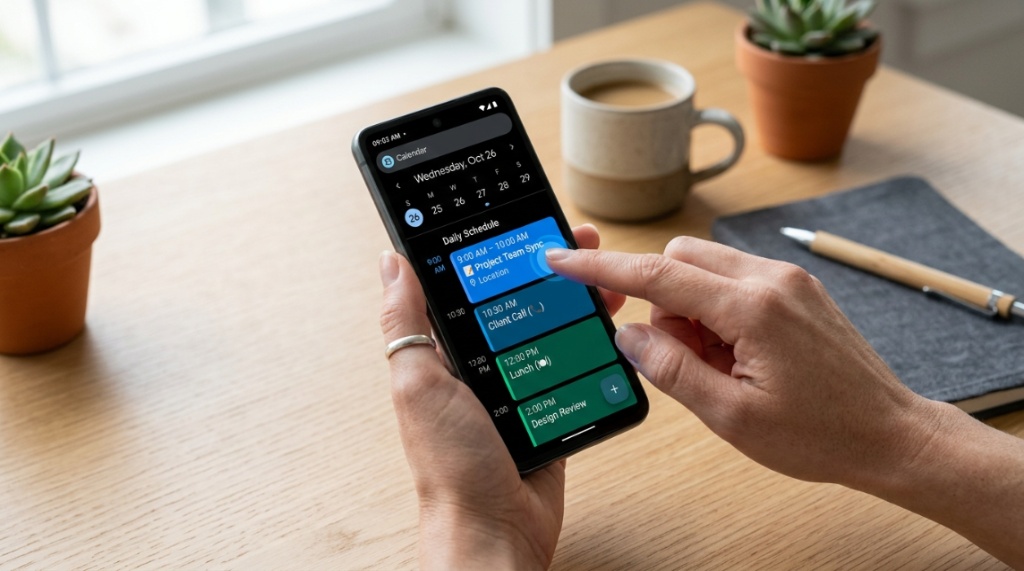
Integration is about connecting your calendar with shopping lists, meal plans, and task management to create a unified organizational ecosystem. This transforms the calendar from a scheduling tool into the hub of your home management, saving time and reducing overwhelm.
Connecting Meal Planning and Grocery Lists
Many advanced apps allow you to link a dinner recipe to a date on the calendar. From these scheduled meals, you can generate a grocery list. When you plan a taco night, for example, it appears on the calendar and immediately adds “tortillas” and “ground beef” to your shared shopping list. This automation eliminates planning friction and helps avoid last-minute takeout decisions.
Synchronizing with Task Management and Chore Charts
Turn recurring tasks like “take out trash” or “parent-teacher meeting” into events with reminders. For daily chores, some calendars (like Cozi) have a dedicated chore chart. By tying tasks to the calendar, you assign time, context, and reminders to them, ensuring they are more likely to be completed without nagging.
Managing Family Finances and Upcoming Bills
Add a “Bills” calendar or tag to schedule regular payments. This visual cue, when combined with scheduled “budget review” sessions, helps keep your finances on track. You can also schedule reminders for when tuition or activities fees are due, ensuring you maintain a clear financial outlook without relying on memory.
Which Digital Calendar Features Maximize Efficiency for Working Parents?
For working parents, efficiency is found in features that manage complex logistics, such as color-coding, robust reminders, and location data. These features reduce the mental effort needed to go from “work mode” to “family mode.”
Color-Coding and Customizable Labels
Assign a distinct color to “Work” versus “Family” events. This immediate visual cue helps you see work-life balance at a glance and forecast potential conflicts far in advance. For example, a color-coded week makes it easy to spot a week where work commitments are encroaching on family evenings, allowing you to rebalance your time before it becomes an issue.
Location-Based Reminders and Geofencing
This powerful feature triggers notifications based on your physical location. Your calendar can remind you to “call the pediatrician” when you leave work, or alert you to pick up the kids when you enter a certain GPS zone. It adds an incredible layer of convenience and ensures actions are taken at the right time and place, not just when an alarm sounds.
Integrating Work and Personal Calendars Securely
While sharing your family calendar, you can use the “overlay” feature in most apps. This allows you to see your work calendar and family calendar on one screen without giving your employer access to your personal events. This presents a unified view of your day, making it easier to spot potential time conflicts between a late work meeting and a child’s recital.
Can a Shared Family Calendar Prevent Overbooking and Stress?
Yes. A shared calendar creates a single source of truth, making it immediately visible when you are being pulled in two directions. This transparency is the most effective tool against overbooking. It doesn’t just track your schedule; it actively helps you manage your family’s workload.
Creating a “Time Budget” for Family Activities
Just as you budget money, you can budget time. Visually with a digital calendar, it’s easier to cap the number of activities per week. If your child wants to do soccer, art, and karate, you can see if the family has the bandwidth to support it. This prevents over scheduling and ensures there is still plenty of free, unstructured time for rest and bonding.
Implementing “No-Go” and “Buffer” Blocks
Intentionally schedule “Buffer” blocks (like a travel buffer between events) and “Protected” family time. These blocks act as a visual contract with your family that this time is reserved. By scheduling relaxation or transition time, you can dramatically reduce the stress associated with a jam-packed calendar, preventing burnout for both parents and children.
The E-E-A-T Perspective on Implementing a Family Calendar System
From an expertise standpoint, we know that successful implementation is less about the app and more about a consistent family routine. The Experience, Expertise, Authoritativeness, and Trustworthity (E-E-A-T) of your system relies on consistency and shared commitment to checking the calendar. Establish a rhythm of updating and reviewing to make the digital calendar a reliable family member.
Building the Habit of “Calendar Literacy”
Make checking the calendar a habit, akin to brushing your teeth. Encourage all family members to add their own events immediately. This requires patience and reinforcement, but it creates a culture of reliability. The more you use it, the more accurate it becomes, and the more trust you’ll place in the system to manage your life.
Customization for Different Age Groups
Adapt the calendar for children’s developmental stages. For younger kids, use picture-based symbols or emojis to represent activities. For teens, grant them ownership by letting them manage their own calendar and sync it to the family one. This instills responsibility and autonomy, preparing them for managing their own busy lives in the future.
Advanced Troubleshooting and Rules
Establish simple rules to maintain system integrity. For example, “If you change an event, you are responsible for updating everyone involved.” Additionally, since many families are on the go, investing in a high-quality, large-screen display in a central location for your digital calendar is crucial. This can be a game-changer for visual households.
Frequently Asked Questions
Why Use a Digital Calendar Instead of a Paper One for Family Life?
Digital calendars offer real-time sharing, automatic reminders, and accessibility from anywhere, which paper calendars cannot match. They reduce the risk of errors through centralized updates and allow all family members to stay informed simultaneously.
Which Digital Calendar App Is Best for Sharing with Kids?
Google Calendar and FamilyWall are excellent choices due to their granular sharing permissions. You can give older kids full control and younger children view-only access, ensuring they see what they need without disrupting the main schedule.
How Do You Handle a Separate Work and Family Schedule?
Use the calendar’s “multiple calendar” overlay function. Subscribe to your work calendar and personal calendar separately. Most calendar apps allow you to view these side-by-side, letting you plan your personal time around work without sharing your private events with your employer.
Is There a Cheap or Free Family Digital Calendar App?
Yes, Google Calendar is entirely free and includes excellent sharing features. Cozi also has a free tier with robust features. Investing time in these tools costs nothing but provides immense value by organizing your family schedule effectively.
When Should I Schedule Family Meetings or Planning Sessions?
Schedule a “Weekly Huddle” on Sunday evening. It’s a low-energy moment that helps you look ahead and prepare for the week. Consistency is key for this ritual to be effective.
Can a Digital Calendar Help with Remote Work and School Schedules?
Absolutely. Being able to share a “Work Schedule” calendar and a “School” calendar allows partners to easily see conflicts. You can add a virtual learning link to the school event, creating a one-click access point for children to find their classes.
What Are the Key Benefits of a “Family Planning Digital Calendar” System?
The primary benefits are reduced stress, better time management, and improved communication. It provides a clear view of everyone’s commitments, preventing double-bookings and empowering the whole family to be organized.