
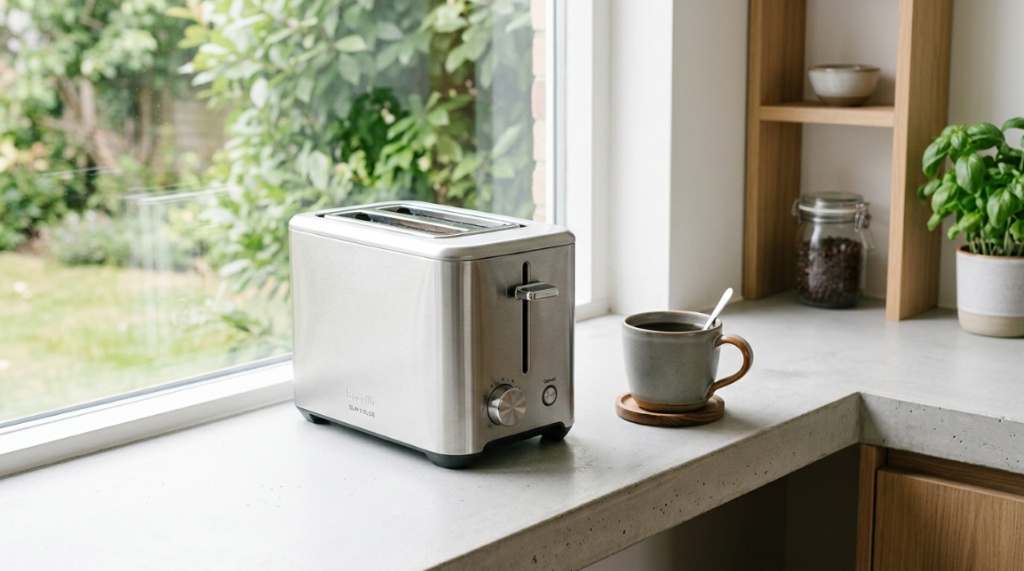
Counter space in a small kitchen is prime real estate. Between the coffee maker, microwave, and knife block, there’s rarely room for a bulky appliance that dominates the countertop. Yet, a daily slice of toast is non-negotiable for many households. If you are tired of wrestling with a wide, clunky toaster that eats up valuable square footage, you are likely searching for a solution that combines functionality with a compact footprint. The answer lies in finding the best slim toaster for small kitchens—a model that offers the performance of a full-size unit without monopolizing the space you need for meal prep. This guide breaks down what to look for, common trade-offs, and how to choose a model that genuinely fits your cooking habits and spatial constraints.
Key Takeaways
- Prioritize vertical slot depth and bread placement over total unit width; a truly slim toaster should handle standard bread slices without forcing you to angle them awkwardly.
- Consider your actual daily usage. If you mostly toast bagels or thick artisan bread, a slimmer model might not offer the wider slots you need, regardless of its compact width.
- Check the cord length and crumb tray design, as these elements greatly influence how well a slim toaster integrates into a tight countertop between an outlet and a backsplash.
- Compare the wattage relative to the unit’s size; a lower wattage in a compact body can lead to slower, less even toasting compared to a full-size high-performance model.
- A budget-friendly slim option can be an excellent starter appliance, but verify the lever mechanism and browning dial quality, as these are often the first components to fail in cheaper units. You can explore a practical starter option like this best slim toaster for small kitchens to see how an affordable model handles these key components.
Defining a “Slim” Toaster: Understanding the Dimensions
Before diving into specific models, it helps to understand what actually makes a toaster slim. Most standard two-slice toasters measure between 10 and 12 inches wide. A slim variant typically comes in under 8 or 9 inches in width. However, the width isn’t the only measurement that matters.
You must also evaluate the height and depth. A long, low profile might look sleek but could block the upper cabinets when you pull the handle down. Conversely, a taller unit with a smaller footprint might be perfect for the small gap between the stove and the sink, provided it doesn’t interfere with overhead cabinets.
The Balance Between Footprint and Slot Size
The main engineering challenge facing slim toasters is fitting a standard bread slice into a narrower body. Most average sandwich bread slices are about 4.5 inches wide. If the toaster is too narrow, the bread sits too low, and the edges hang over the slots, leaving the crust pale and untoasted. The narrowest models often sacrifice the ability to toast wider bakery items. When you are looking at a unit, measure the slot itself, not just the outer chassis. A prototypical compact design minimizes the chassis width while keeping the slot wide enough to accommodate a standard slice so that you don’t have to push the bread down sideways, which leads to uneven browning.
Why a Slim Toaster Is a Smart Purchase
Investing in a slim toaster is more than just an aesthetic choice; it is a practical response to the modern kitchen layout.
- Countertop flexibility: A narrower unit allows you to place it facing forward or side-on, making it easier to tuck under a cabinet or wedge next to the spice rack.
- Storage efficiency: If you live in an apartment or rent a vacation home, a slim model is easier to pack away in a cabinet when you need the counter space for entertaining.
- Open sight lines: In an open-plan living space, a bulky toaster can obstruct the view from the kitchen to the dining area. A slim profile keeps the visual clutter down.
That said, there is a misconception that ‘slim’ means ‘low-end’. While many economy brands offer slim designs, several premium manufacturers have introduced compact models with high-end features like extra-wide crumb trays and cancel functions. The trick is not to judge a product by its width, but by its construction quality.
Key Features to Evaluate Before You Buy
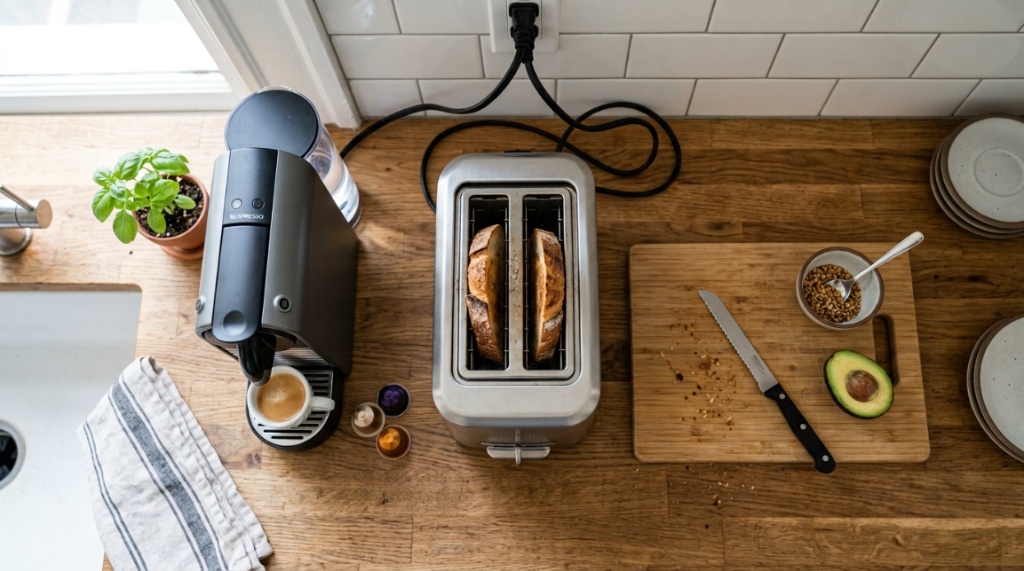
When you are down to a few finalists, comparing them solely on appearance isn’t enough. There are several operational details that dictate the long-term satisfaction with your purchase.
Browning Control and Bagel Function
Even if you only make toast, a reliable browning control is vital. Cheaper toasters often have a rudimentary thermostat that runs hotter over time. Look for a model with a mechanical dial with clearly marked settings. If you enjoy bagels, check whether the unit has a bagel mode. In a slim appliance, the bagel function might not operate the same way as a wide toaster due to the heating element layout. Often, slim toasters rely on the same coil configuration for both cycles, meaning you might need to alter the dial setting manually when switching from a bagel to a slice of sourdough.
Heating Element Configuration
Even heating is the holy grail of toasting. In a narrower body, manufacturers might use shorter wires, which can lead to hot spots where the bread scorches in the center but remains white at the edges. A quality slim toaster uses a zig-zag wire configuration that spans the entire width of the slot effectively. If you cannot physically test the toaster, read user reviews specifically for “evenness” rather than just “makes good toast”. Search for reviewers who complain about having to run the toast cycle twice—this is a red flag for poor heat distribution.
Durability of the Mechanism
Check the lever mechanism. The carriage lifter should feel smooth and click into the ‘down’ position securely without requiring significant force. In slim models, the spring mechanism is often narrower and less robust. We see many cheap toasters fail because the lever gets stuck halfway after a few months of daily use. Metal-bodied toasters generally have better-weighted levers than plastic ones, but they also tend to get hotter on the outside—a concern if you have small children reaching for the toaster.
Slim Versus Compact: Which One Actually Fits?
It is helpful to differentiate between a “slim” toaster and a “compact” toaster. In the appliance industry, these terms are often used interchangeably, but consumers may have different expectations.
| Feature | Slim Toaster | Compact Toaster |
|---|---|---|
| Primary Dimension | Narrow width (usually < 8 inches) | Reduced volume overall (smaller height and depth) |
| Bread Capacity | Retains standard vertical slice height | May require smaller bread or horizontal placement |
| Counter Depth | Often similar to standard toasters (longer) | Shorter depth for shallow counters |
| Target Use Case | Narrow galley gaps and fit between appliances | Tiny kitchen corners or under-cabinet storage |
| Feature Set | Can retain many features due to length | Usually stripped-down features to save space |
A slim toaster is generally the better choice for the majority of homeowners. It allows you to toast standard bakery bread without compromising the quality of the crumb. A compact toaster, which is often shorter and narrower, might be suitable for a dorm room but often struggles with regular English muffins or thick-cut Texas toast. You need a fuller slot length to accommodate those items, Before upgrading your countertop appliances with a space-saving model, make sure your washing station matches your layout with our guide on What Are the Different Types of Kitchen Sinks?
Potential Downsides of Narrow Toasters
Honest advice requires a look at the limitations. While these machines are excellent for tight spaces, they aren’t without their quirks.
Heat Radiation and Counter Safety
Because the heating elements are pulled closer together in a narrow chassis, the exterior plastic or metal can get hotter. With less air circulation surrounding the staple components, the shell of a slim toaster can radiate heat downwards and sideways. Ensure you have a clear gap of at least two inches on either side of the toaster while in use. Placing it flush against the wall or another appliance is a safety hazard. Always check the feet of the toaster; they should be sturdy enough to prevent the unit from tipping forward when you pop the toast up with a heavy hand.
The Crumb Tray Paradox
In smaller toasters, the crumb tray is a particular weak point. A tray that slides out from the front is essential because accessing the bottom of a slim toaster in a crowded corner is difficult. However, the tray in a slim unit is often smaller, meaning it fills up faster. If you toast bread daily, you will likely need to empty the tray every week to prevent crumbs from burning and smelling. Check if the tray is easy to grip; a flimsy tab that bends or snaps is a common failure point.
Who Should Absolutely Buy a Slim Toaster?
This type of appliance is the ideal solution for a specific persona. It is the perfect fit for the “Galley Kitchen Dweller” who has 14 inches of counter space between the sink and the coffee machine. It is also great for individuals who toast one or two slices in the morning and want a tool that is effective without being intrusive. If you primarily use your toaster for bread and bagels—not frosted pastries or Belgian waffles—a slim design will serve you well for years.
Conversely, if you have a large family or frequently host brunches where four slices of toast are needed simultaneously, a slim two-slice model will frustrate you due to the increased time needed for consecutive batches. In this case, you would be better served by investing in a wide-slot four-slice unit and removing an unused appliance from the counter to make room.
How to Test If a Slim Toaster Meets Your Needs
When your new toaster arrives, you should run a few diagnostic tests before relying on it daily.
- Empty burn-in: Run the toaster once without bread on the lightest setting. This burns off manufacturing residue and gives you a baseline for the internal temperature.
- The white bread test: Insert a standard slice of white bread. Set the dial to a medium setting (3 out of 5). Look for uniform golden color across the entire surface, including the bottom corners. If the top is dark and the bottom is pale, the element placement is off.
- The cold bread test: Try toasting a slice straight from the freezer. Does the lever stay down? Some cheaper slim toasters have premature pop-up mechanisms when they sense high resistance, which is terrible for frozen bagels.
These performance checks give you a much better idea of the engineering quality than any marketing claims about “quick toasting technology.”
Frequently Asked Questions
Can a slim toaster handle thick bagels?
It depends on the slot width. Many slim toasters are designed for standard bread. If you need to toast thick bagels, look for a slim unit with a designated centering guide or a wider slot depth. If the unit is too narrow, the bagel might not slide down fully, resulting in an untoasted top edge.
Are slim toasters harder to clean?
Not necessarily, provided the model has a removable crumb tray. The exterior is smaller, so wiping it down is quick. However, the inner cavity is tighter, making it harder to reach deep crumbs with a brush. Regular emptying of the tray is necessary to prevent buildup.
Do slim toasters use less electricity?
They typically require fewer watts due to lower heat demand. Most slim toasters range around 800 to 900 watts compared to 1200 watts in larger units. This means they might toast slightly slower, adding 30 to 45 seconds to the cycle time.
Is a sleek design worth sacrificing toasting quality?
Yes, but only if the slim design retains a sufficient slot length. Many users find that a narrow footprint is more valuable than having the ability to toast huge artisan loaves. You will need to prioritize which is more important for your daily routine.
Conclusion
Finding the best slim toaster for small kitchens means prioritizing countertop footprint without neglecting the electrical and mechanical components that actually create good toast. Look beyond the aesthetic appeal of a skinny unit and examine the slot depth, the lever action, and the wattage. When chosen correctly, a slim toaster fits elegantly into a tight space, leaving your countertops clear while still providing that crispy, golden breakfast staple. Measure your available space carefully, compare the features that matter most to your toasting habits, and select a model that offers the durability to match your morning routine.