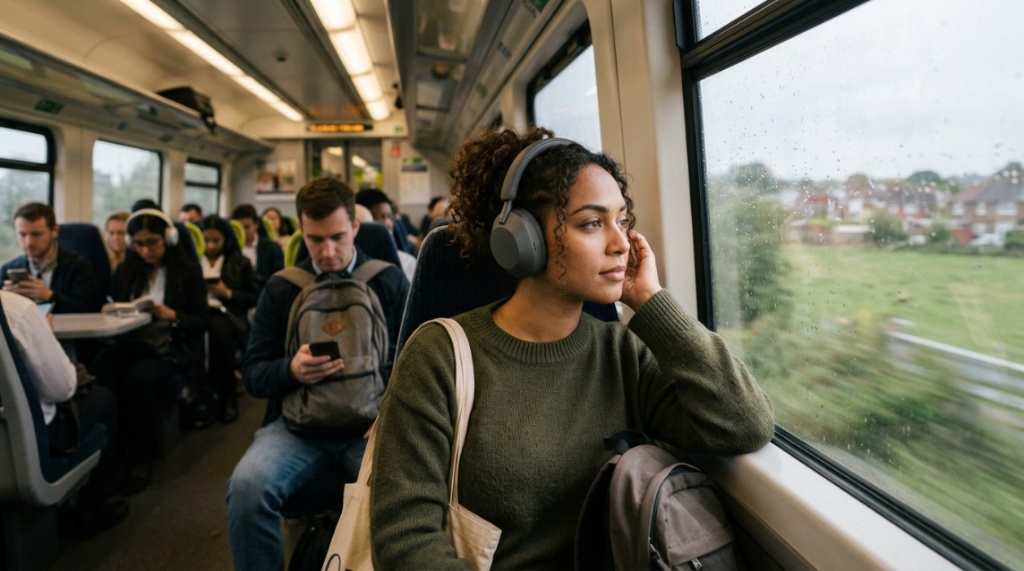
You know the feeling. You’re halfway through a transcontinental flight, your favorite podcast is just getting interesting, and then you hear it the low-battery warning tone. Your headphones die, and you’re left staring at an uncomfortable airplane ceiling for the next three hours. We’ve all been there. The solution isn’t complicated; you need long-battery-life over-ear headphones. But with so many models promising “all-day playback,” how do you separate marketing hype from genuine endurance? This guide will walk you through the critical specs, real-world performance metrics, and hidden features that actually determine whether your headphones will last the distance.
What Does “Long Battery Life” Actually Mean for Over-Ear Headphones?
Understanding the Baseline Standards
When manufacturers say “long battery life,” they typically mean anything above 30 hours of continuous playback. However, the current industry leaders push well beyond that. Budget models often deliver 20–30 hours, mid-range options hit 40–50 hours, and premium flagships can exceed 60 hours. For context, a standard transatlantic flight from New York to London takes about 7–8 hours. A pair with 30 hours of battery life would comfortably cover four round trips without needing a charge.
Why Over-Ear Headphones Win on Battery
Over-ear headphones have a physical advantage over their in-ear counterparts. Their larger housings accommodate bigger batteries without compromising comfort or design. While true wireless earbuds typically struggle to offer more than 8–10 hours per charge, over-ear headphones can pack batteries ranging from 500mAh to 1,100mAh. This size advantage translates directly into longer playback sessions and less frequent charging anxiety.
The Difference Between Claimed and Real-World Battery Life
Always take manufacturer battery claims with a grain of salt. Those numbers are usually measured at moderate volume levels (around 50%) with noise cancellation turned off. In real-world usage, features like active noise cancellation (ANC), high volume levels, and streaming via Bluetooth can reduce battery life by 20–30%. A headphone rated for 40 hours might realistically deliver 30–34 hours in daily mixed use. Always look for independent reviews that test battery life under realistic conditions.
Which Battery Capacity Should You Look For?
Battery Size vs. Charging Speed Trade-Off
Larger batteries mean longer listening sessions, but they also take longer to recharge. A 1,000mAh battery might require 3–4 hours for a full charge, while a 500mAh battery can often reach full capacity in under 2 hours. The sweet spot for most users is a battery capacity between 700mAh and 900mAh. This range offers 40–50 hours of playback while keeping charge times reasonable. Some newer models also support fast charging, giving you 2–3 hours of playback from just a 10-minute charge.
Quick Charge Features: The Hidden Game Changer
Fast charging capability is arguably more important than raw battery capacity. Even if your headphones have 60 hours of battery life, you’ll eventually forget to charge them. Quick charge features—where 5–10 minutes of charging provides 1–3 hours of playback—save you in those moments. Sony’s WH-1000XM5, for example, offers 3 hours of playback from a 3-minute charge. When evaluating long battery life over-ear headphones, prioritize models that include fast charging alongside high capacity.
Battery Degradation Over Time
Lithium-ion batteries degrade with every charge cycle. After 500 full charge cycles, most batteries retain only 70–80% of their original capacity. If you charge your headphones every 3 days, that’s roughly 120 cycles per year. After 4 years, your 40-hour headphones might only deliver 28–32 hours. Look for models with replaceable batteries—though rare in headphones—or choose brands that offer affordable out-of-warranty battery replacement services.
How Does Active Noise Cancellation Affect Battery Life?
ANC Power Consumption Explained
Active noise cancellation requires constant power to generate anti-noise waves. On most over-ear headphones, enabling ANC reduces total battery life by 15–25%. For example, the Bose QuietComfort 45 delivers 24 hours with ANC on but stretches to 30 hours with ANC off. This is a significant difference, especially on long trips. If you’re in a quiet environment, consider turning ANC off to extend playback time.
Adaptive vs. Manual ANC Control
Some premium headphones now feature adaptive ANC that automatically adjusts noise cancellation intensity based on your environment. While convenient, adaptive modes often consume slightly more power because the microphones and processors are constantly analyzing ambient sound. Manual ANC modes—where you set it once and forget it—tend to be more battery-friendly. If maximum battery life is your priority, choose a headphone with manual ANC control.
Transparency Mode’s Hidden Battery Drain
Transparency or ambient sound modes also use microphones and processing power, but they typically consume less battery than full ANC. On average, transparency mode reduces battery life by 5–10% compared to ANC-off operation. Still, if you’re trying to squeeze every minute out of a charge, keeping all sound processing features off is the most efficient approach.
Why Does Bluetooth Version Matter for Battery Life?

Bluetooth 5.0 vs. 5.3 Efficiency Gains
Bluetooth version directly impacts power consumption. Bluetooth 5.0 introduced Low Energy (LE) audio features that reduced power draw during streaming. Bluetooth 5.2 and 5.3 further improved this with LE Audio and LC3 codec support. Headsets with Bluetooth 5.3 typically use 15–20% less power during continuous playback compared to Bluetooth 5.0 models. This efficiency gain translates directly into longer battery life without requiring a larger battery.
Codec Choice and Battery Drain
The audio codec you use affects both sound quality and battery consumption. SBC (the standard codec) is relatively efficient. AAC uses slightly more power on Android devices. LDAC and aptX HD, while offering superior sound quality, can increase power consumption by 10–15% because they transmit more data. For maximum battery life, stick with SBC or AAC, especially when battery levels are running low.
Multipoint Connection Impact
Multipoint Bluetooth—where your headphones connect to two devices simultaneously—conveniently lets you switch between your phone and laptop. However, maintaining two active Bluetooth connections increases power draw. On average, multipoint reduces battery life by 5–8%. If you don’t need this feature, disabling it can add an extra hour or two to your total listening time.
How to Test Real-World Battery Performance Before Buying
Check Independent Review Benchmarks
Don’t rely solely on manufacturer specifications. Sites like RTINGS.com and Wirecutter perform standardized battery tests that simulate real-world usage. They test with ANC on, at 75dB volume, using continuous music playback. These benchmarks are far more reliable than the numbers on a product page. Look specifically for reviews that include a “battery life at max volume” test, as this represents the worst-case scenario.
Look for USB-C Charging Standard
USB-C is now the industry standard for a reason. It supports higher charging speeds (up to 100 watts) and allows for reversible connections. More importantly, USB-C makes it easier to carry a single cable for all your devices. Avoid headphones still using micro-USB—they charge slower and the cables are becoming increasingly difficult to find. All modern long battery life over-ear headphones should include USB-C ports.
Battery Indicator Accuracy Matters
A headphone with excellent battery life is useless if its battery indicator is inaccurate. Some budget models show 100% battery for the first 10 hours, then drop to 20% within 30 minutes. Look for headphones with granular battery indicators—ideally showing percentage increments rather than just bars. Apple and Sony headphones generally have accurate battery reporting, which helps you plan charging more effectively.
Which Features Drain Battery the Fastest?
Volume Level as a Battery Killer
Volume has a dramatic effect on battery life. At 50% volume, most headphones operate efficiently. At 80% volume, power consumption increases by 20–30%. At maximum volume, you might see battery life drop by 40% or more. This is because the amplifier has to work harder to drive the drivers at higher volumes. If you’re running low on battery, lowering the volume will extend playback more than turning off ANC.
Spatial Audio and Virtual Sound Stages
Spatial audio, surround sound simulation, and head-tracking features are battery-intensive. These features require additional processing power to create a 3D sound field and track head movements. Models like the AirPods Max lose about 20% of their battery life when spatial audio is enabled with head tracking. Use these features sparingly when battery is critical.
Constant Voice Assistant Wake Words
Headphones that support “Hey Siri,” “Alexa,” or “Google Assistant” wake-word detection keep the microphones active at all times. This constant listening consumes power, even when you’re not giving commands. On many models, disabling the always-on voice assistant can extend battery life by 5–10%. If you rarely use voice commands, turn this feature off in the companion app.
What Charging Habits Maximize Battery Lifespan?
Avoid Deep Discharges
Lithium-ion batteries experience the most stress when they drop below 20% charge. Repeated deep discharges accelerate chemical degradation. Ideally, keep your headphones charged between 20% and 80%. This range minimizes stress on the battery cells and can double the total number of charge cycles before significant degradation occurs.
Partial Charging Is Better Than Full Cycles
You don’t need to wait until your headphones are completely dead to charge them. Partial charging—topping off from 30% to 70%—is actually healthier for the battery than a full 0% to 100% cycle. Modern headphones with smart charging circuits handle partial charges well. If you’re not planning a long trip, feel free to charge whenever it’s convenient rather than sticking to a strict cycle.
Heat is the Enemy
Heat accelerates lithium-ion battery degradation more than any other factor. Never leave your headphones in direct sunlight, in a hot car, or on a charger in a warm room. High temperatures during charging are particularly damaging. If your headphones feel warm to the touch while charging, unplug them and let them cool down. Most headphones have thermal protection, but you should still avoid extreme heat exposure.
Can You Replace or Upgrade the Battery Yourself?
Removable Battery Designs Are Rare
Very few modern over-ear headphones feature user-replaceable batteries. Most are sealed units that require professional disassembly. Some niche brands like Beyerdynamic and AKG offer models with replaceable battery packs, but these are exceptions. If long-term repairability is important to you, look for headphones marketed as having replaceable batteries.
Professional Battery Replacement Options
Major brands like Sony, Bose, and Sennheiser offer battery replacement services for a fee, typically ranging from $40 to $80. This is usually more affordable than buying new headphones. Check your warranty first—battery issues are often covered for 1–2 years. After the warranty expires, authorized repair centers can replace the battery while preserving your headphones’ other components.
DIY Replacement Risks
Attempting to replace the battery yourself voids the warranty and risks damaging the delicate internal components. Lithium-ion batteries are also a fire hazard if punctured. Unless you have experience with electronics repair, professional replacement is strongly recommended. The cost of replacement is usually justified given the price of quality over-ear headphones.
How to Choose Between Wired and Wireless for Battery Concerns
Wireless Offers Convenience, Wired Offers Unlimited Playback
If battery anxiety is a major concern, consider a hybrid model that offers both wireless and wired operation. Most over-ear headphones include a 3.5mm audio cable. When connected via cable, the headphones work passively—no battery required. This is ideal for long flights or workdays where you don’t want to worry about charging. Just remember that wired playback bypasses ANC and other powered features.
Passive Noise Isolation vs. Active Noise Cancellation
Wired headphones often rely on passive noise isolation—the physical blocking of sound by the ear cups. While less effective than ANC, passive isolation requires no power. If you’re in a moderately quiet environment or willing to accept more ambient noise, using your headphones in wired mode preserves battery for when you truly need wireless freedom.
Wireless Charging Features
Some premium over-ear headphones now support Qi wireless charging. While convenient, wireless charging is typically slower and slightly less efficient than wired charging. However, it’s excellent for topping off your headphones during short breaks. If you already have a wireless charger for your phone, this feature adds negligible convenience without negatively affecting battery health.
Frequently Asked Questions
How many hours of battery life do I really need for daily use?
For daily commuting and office use, 20–30 hours is sufficient. This covers a full work week with a single charge. For travel or frequent flying, aim for 40+ hours to avoid charging mid-trip. Heavy users who listen 8+ hours daily should prioritize 50+ hour models.
Do longer battery life headphones weigh more?
Not necessarily. Advances in lithium-ion battery technology allow manufacturers to pack more capacity into smaller, lighter cells. Many 50-hour headphones weigh under 250 grams. However, extremely large batteries (1,000mAh+) do add weight, typically 10–20 grams compared to 500mAh models.
Can I use my headphones while they’re charging?
Yes, most modern headphones support pass-through charging, meaning you can listen while plugged in. This is useful during long workdays or while traveling. However, continuous use while charging can generate extra heat, so avoid doing this frequently if you want to preserve battery health.
Is battery life more important than sound quality?
It depends on your usage. If you’re a frequent traveler, battery life is critical. If you listen primarily at home or the office, sound quality and comfort may take priority. Look for headphones that balance both. Many premium models now deliver 40+ hours without compromising audio performance.
Do budget headphones have good battery life?
Yes, budget headphones (under $100) often offer surprisingly good battery life. Brands like Anker Soundcore and JBL produce models with 40–60 hours of playback. However, battery life claims on budget models are less consistent, so always check independent reviews before purchasing.
How often should I fully discharge my headphones?
Modern lithium-ion batteries do not require full discharge cycles. In fact, keeping the battery between 20% and 80% charge is healthier. If you want to calibrate the battery indicator, do a full discharge and recharge every 2–3 months.
What happens when the battery dies completely?
If the battery drops to 0%, the headphones will shut off. Most models allow wired playback even with a dead battery, but powered features like ANC and Bluetooth streaming will not work. Always charge your headphones before they reach 0% to prevent deep discharge damage.
Choosing the right pair of headphones isn’t just about specs—it’s about finding a set that matches your lifestyle. If you frequently forget to charge devices, prioritize fast charging over raw capacity. If you’re a power user, focus on models with 50+ hours and efficient Bluetooth 5.3 chips. And always consider hybrid wired/wireless options for total peace of mind. Your ears deserve headphones that keep up with your schedule, not the other way around. Take the time to compare models, read independent battery tests, and you’ll find the perfect long-lasting companion for your daily audio adventures.