
You finally bought a Shark steam mop to ditch the harsh chemicals and make floor cleaning easier. But after a few uses, you notice streaks on your tile, or the pads seem to lose their effectiveness quickly. The truth is, the performance of your steam mop depends almost entirely on how you handle its pads. Using them incorrectly is the number one reason people think their steam mop is broken. This guide walks you through everything you need to know—from choosing the right pad type for your floor to washing them so they last for years.
Key Takeaways
- Match the pad to the floor: Using a standard white pad on delicate hardwood can cause damage; always check your floor manufacturer’s guidelines before steaming.
- Never use fabric softener or bleach: These chemicals clog the microfibers, reducing absorbency and leaving behind residue that causes smearing.
- Replace pads proactively: When the pad loses its plush texture or starts to thin out, it is time to replace it, regardless of how old it is.
- Wash pads separately: Washing steam mop pads with cotton towels or items with zippers can snag the microfibers and ruin their cleaning efficiency.
Why the Right Pad Matters for Different Floor Types
The material and thickness of the pad determine how much water is delivered to the floor and how much friction is created. Shark typically offers two main variants: the standard white pads (often for hard floors) and the softer grey or multi-colored pads designed for delicate surfaces like hardwood or laminate. Swapping these can lead to poor results.
For instance, using a heavy-duty scrub pad on sealed hardwood can leave micro-scratches over time, while using a soft polishing pad on greasy kitchen tile just pushes the grime around. If you are looking for specific recommendations on pads that work best in humid climates or for high-traffic homes, checking a regional guide like this resource on Shark steam mop pads can save you from costly trial and error.
Standard White Pads
These are your workhorses. They are dense and have a slightly abrasive texture that is excellent for lifting stuck-on dirt from sealed tile, stone, and linoleum. You should use these in areas like the entryway or kitchen where you need more scrubbing power.
Soft Microfiber Pads
These pads are plush and have a smoother weave. They are specifically designed to be gentle on sensitive surfaces. Use these on:
- Hardwood
- Laminate
- Bamboo
- Vinyl plank
The softer fiber glides without scratching and provides better absorption to prevent leaving excess water on the wood.
Step-by-Step: Prepping the Mop and Pad
Preparation is critical. A dry pad or a clogged mop head will ruin your cleaning session. Here is the correct sequence to follow before you press the steam trigger.
1. Sweep or Vacuum First
Shark steam mops are not vacuums. They are designed to sanitize and clean, not to pick up large debris. If you steam over crumbs, pet hair, or grit, the pad will drag them across the floor, causing scratches. Always dry-clean the floor thoroughly before attaching the pad.
2. Install the Pad Correctly
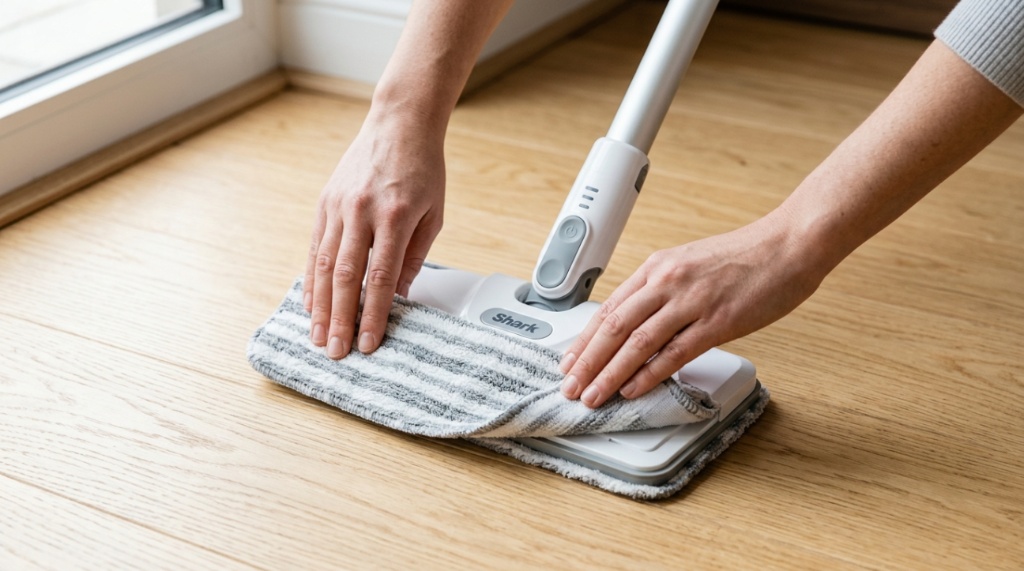
Lay the mop head flat on the floor and slide the pad over the bottom. Ensure the pocket straps align with the hook-and-loop fasteners. A misaligned pad will bunch up mid-clean and miss spots. Tighten the straps until they are snug but not stretching the fabric.
3. Fill with Distilled Water
Tap water contains minerals that build up inside the steam boiler and clog the spray nozzles. This scale gets transferred to the pads, making them stiff and less absorbent. While Shark mops can handle tap water, distilled water extends the life of both the mop and the pads.
Proper Mopping Technique to Maximize Pad Efficiency
Using the mop like a traditional swiffer might seem intuitive, but steam mops work differently. They use a combination of heat and pressure. To get the most out of the pad, you need to change your movement pattern.
Use slow, overlapping passes rather than quick, frantic swipes. The heat needs about a second to break down the grime on the floor. If you move too fast, the pad only wets the surface without lifting the dirt, and you will see puddles left behind.
The “S” Curve Method: Instead of pushing the mop straight backward, use a side-to-side “S” pattern. This ensures that the entire width of the pad is utilized evenly. If you only push straight, you will wear out the center of the pad while leaving the edges fresh, leading to uneven cleaning and premature replacement.
How to Wash Shark Steam Mop Pads (Without Ruining Them)
This is where most people make a critical mistake. The microfibers are sensitive. They require specific washing conditions to remain effective. The #1 killer of steam mop pads is fabric softener. It coats the tiny fibers and closes off the microscopic spaces that absorb water and trap dirt. This makes the pad slippery and causes it to smear water rather than pick it up.
The Washing Machine Rules
Follow these exact steps to keep the pads fluffy and effective:
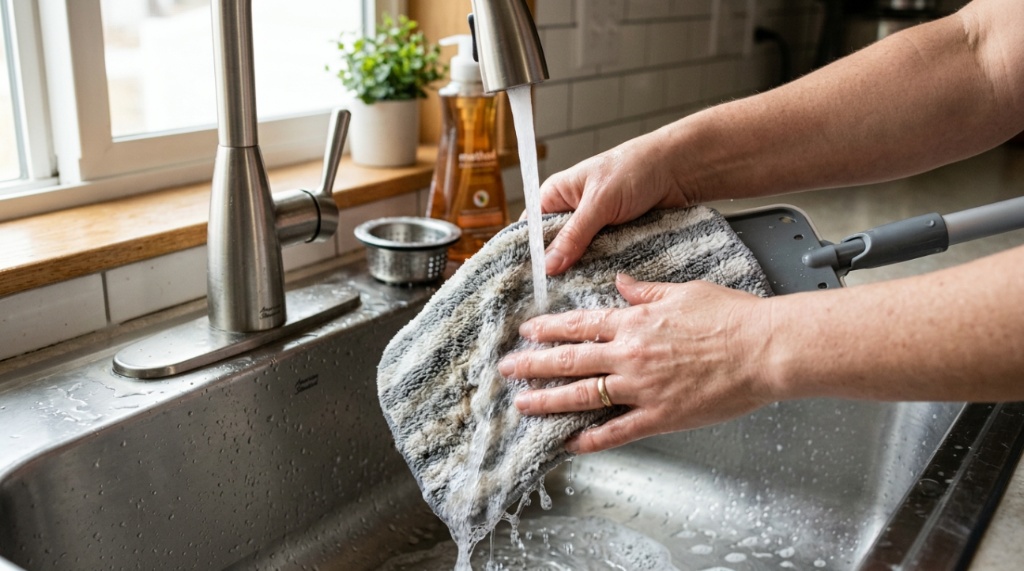
- Shake them out: Before washing, take the pad outside and shake it vigorously to remove loose hair and debris. This prevents clogging your washing machine drain.
- Wash warm: Use a warm water cycle (around 104°F / 40°C). Hot water can set in stains, and cold water is less effective at removing the oils from the microfiber.
- Use liquid detergent: Skip the powder and skip the bleach. Powders do not rinse out easily from dense microfibers. If you must sanitize, use oxygen bleach (like OxiClean), but never chlorine bleach.
- Add white vinegar: Add a half-cup of white vinegar to the rinse cycle. This helps break down residual detergent and neutralizes the bacteria odors that can linger in a damp pad.
- Air dry or tumble low: Heat from a dryer can melt the synthetic fibers, causing them to stick together. The best method is air drying. If you are in a hurry, tumble dry on the lowest heat setting with NO dryer sheets. Before tackling your floors, ensure you are fully prepared for your next aquatic adventure by learning how to Buy Durable Neoprene Water Socks on a Budget.
Maintenance: When to Dry, Replace, and Store
Proper storage and knowing the lifespan of your pads are just as important as the washing routine. A damp pad left in a dark closet will develop mildew within 24 hours.
Drying Between Rooms
If you are cleaning the whole house, you should switch pads between rooms. We recommend using a fresh pad for the kitchen and a separate one for the bedrooms. This prevents transferring bacteria from the bathroom into the living room. Simply pull the dirty pad off and attach a clean one.
When to Replace
Shark pads do not last forever. With heavy use (once a week), they last about 3–4 months. With light use, they can last up to 6 months. Signs you need to replace them:
- The fibers look flat and matted.
- The pad leaves lint or fuzz on the floor.
- The floor looks smeared immediately after cleaning.
- There are visible holes, tears, or frayed edges.
Continuing to use a worn-out pad defeats the purpose of the steam mop because the heat has less contact with the floor. It also forces you to go over the same spot multiple times, wasting energy and time.
Common Mistakes That Ruin Pads Quickly
Let’s look at the specific actions that shorten the lifespan of your pads.
Steaming Over Chemical Cleaners
Do not spray a chemical cleaner on the floor and then run the steam mop over it. The heat combined with the chemical creates a sticky residue that clogs the pad. It also causes the pad material to degrade faster. Stick to the steam alone.
Letting the Pad Sit on the Floor
When you pause to answer the phone or open the door, you might leave the mop standing upright. However, if you leave it flat on the floor, the residual heat will bake the moisture into the fibers. This can warp the pad and etch the floor. Always rest the mop on its heel rest when idle.
Dragging the Mop Over Sharp Edges
Drag the mop over the sharp metal edge of a tile transition or a stair nose will tear the fabric. When crossing thresholds, lift the head slightly rather than dragging it across.
Frequently Asked Questions
Can I use Shark steam mop pads on unsealed hardwood?
No. Steam mops are not recommended for unsealed hardwood. The heat and moisture will penetrate the wood and cause warping and discoloration. Only use steam on hardwood that has a strong, intact polyurethane seal.
Why is my Shark mop leaving a white film on the floor?
This is usually caused by hard water minerals or using too much detergent. If the film returns after cleaning, stop using tap water and switch to distilled water. You may also need to wash the pads twice to remove detergent buildup.
Can I use vinegar in the water tank?
No, do not put vinegar in the water tank. The acidic nature can corrode the internal plastic and rubber seals of the mop. Only use vinegar in the washing machine when cleaning the pads, never inside the mop itself.
How many pads do I need for the house?
We recommend buying at least two packs (usually 4–6 pads total). This allows you to change pads after mopping the kitchen and continue with a fresh pad for the rest of the house without waiting for laundry to dry.
Are Shark pads reusable?
Yes. Shark steam mop pads are washable and reusable. You should never throw them away after a single use. With proper washing, they can last for months before needing replacement.
Conclusion
Getting the most out of your Shark steam mop comes down to respecting the pads. They are precision cleaning tools, not just rags. By matching the pad to your floor type, sweeping before you steam, and washing them without fabric softener, you eliminate streaks, protect your floors, and extend the life of your mop. Pay attention to the wear pattern—if you see smearing, check for a clogged fiber or mineral buildup first. A little routine maintenance goes a long way, keeping your floors spotless and your mop running at peak performance.