You check the forecast, see a perfect 75-degree sunny day, and load your board onto the car. Two hours later, you’re fighting a 15-knot headwind that makes the paddle back feel like a punishment. California’s weather can shift faster than the surf report updates, and the variables that matter for paddle boarding are not the same ones that matter for a beach picnic. Understanding wind, swell, fog, and water temperature across the state’s distinct coastal regions is what separates a great session from a miserable one. After having tested this LEDONNE paddle on California waters in everything from glassy morning lakes to choppy afternoon ocean chop, the lesson is clear: the weather doesn’t just affect comfort, it affects safety, paddle choice, and route planning.
Quick Answer
In California, wind speed and direction are the most important weather factors for paddle boarding, followed by swell height and period on the coast, and water temperature year-round. Morning sessions typically offer calmer conditions before afternoon winds build. Fog along the coast reduces visibility, and cold Pacific water (often 55–65°F) makes a wetsuit or quick-dry layers essential. Inland lakes and bays behave differently from open ocean, so location-specific forecasting matters more than a single statewide rule.
Key Takeaways
- Wind is the single biggest factor: anything above 10–12 knots makes paddling tiring and, for beginners, potentially unsafe on open water.
- California’s coast and inland waters have opposite patterns—afternoon wind is common on the coast, while inland lakes often calm in the evening.
- Water temperature is consistently cold along the entire coast, even in summer, so plan your gear around water, not air temperature.
- Fog and marine layer reduce visibility quickly; always carry a way to navigate back if the shoreline disappears.
- Check three things before every session: wind forecast, swell report (coastal only), and tide timing.
Why Wind Matters More Than Anything Else
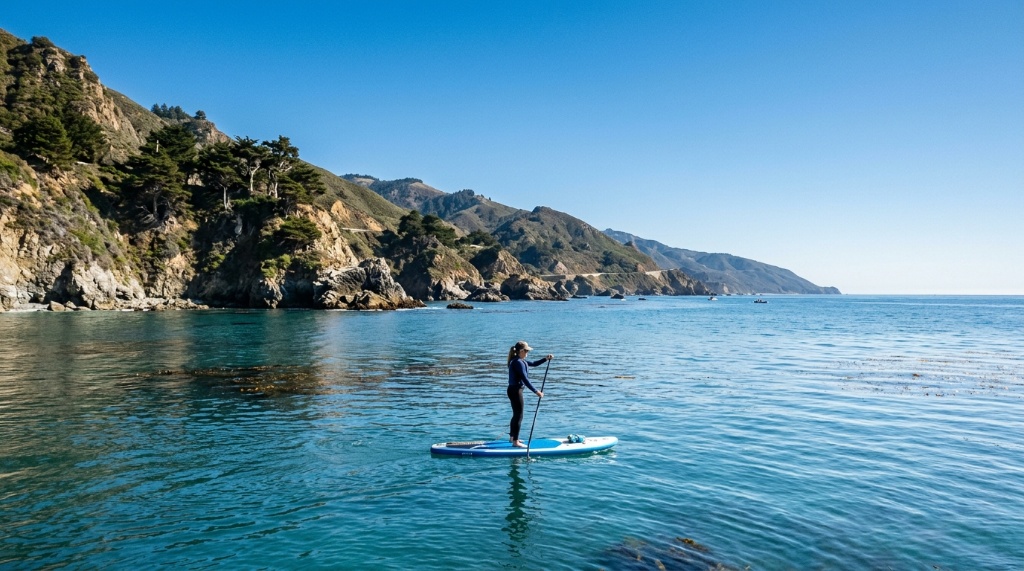
Wind is the variable that most often turns a planned paddle into a struggle. A 10-knot wind doesn’t sound dramatic on paper, but it creates chop that slows your board, pushes you off course, and forces you to paddle harder just to maintain position. Because most paddleboards have significant surface area above the waterline, they act like sails—you catch wind even when you’re standing still.
The direction matters as much as the speed. An offshore wind (blowing from land to sea) pushes you away from shore, which can be dangerous if it strengthens. An onshore wind (sea to land) is generally safer because it pushes you back toward the beach, but it creates choppy, disorganized water. A side-shore wind makes for a wet, awkward paddle where you’re constantly correcting your heading, Before heading out on the water, make sure you protect your feet by learning how to choose swim shoes for lakes and rivers.
Coastal Wind Patterns
Along the California coast, the classic pattern is light and variable in the early morning, then a building sea breeze through the afternoon. In summer, this sea breeze can push 15–20 knots by 2 p.m. in places like San Francisco Bay, Santa Monica Bay, and the central coast. That’s why dawn patrol isn’t just a surfer habit—it’s a genuinely practical window for paddleboarders.
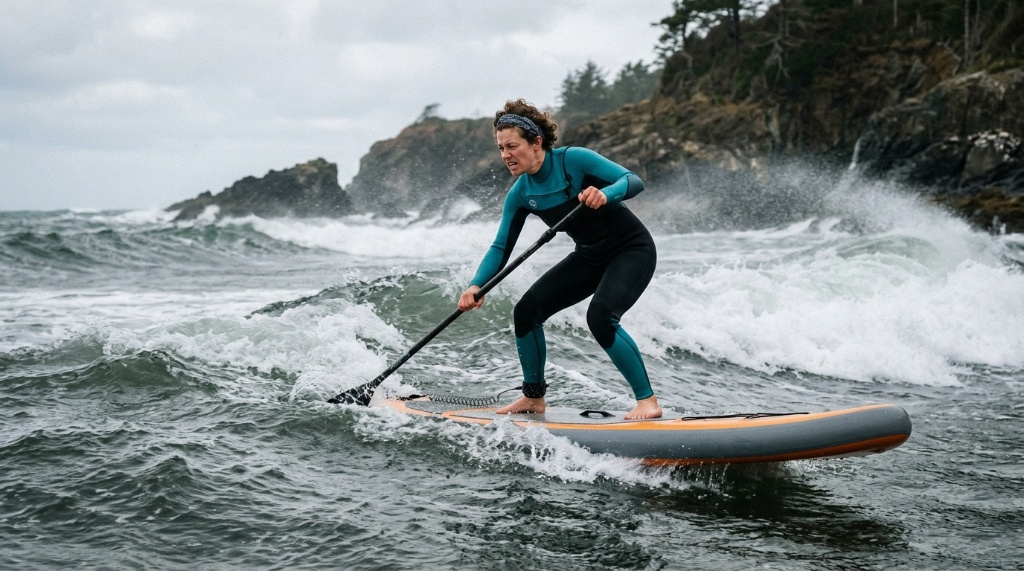
In fall, the pattern can reverse. Santa Ana winds bring hot, dry, offshore gusts that can appear with little warning in Southern California. These are especially dangerous for paddleboarding because they blow you out to sea and can escalate from calm to 25+ knots in under an hour.
Inland Lake and River Patterns
Inland waters like Lake Tahoe, Lake Natoma, or the Colorado River reservoirs behave differently. Thermal winds often build through the late morning and peak in the early afternoon, but many inland lakes go glassy again in the evening as the land cools faster than the water. This makes sunset paddles on inland lakes some of the calmest sessions of the day—the opposite of what you’d expect on the coast.
How Swell and Surf Affect Ocean Paddleboarding
Swell is the second critical factor on the coast, and it’s the one beginners most often underestimate. A long-period swell (12+ seconds) generates powerful, organized waves that can break far from shore and create strong currents. A short-period swell (6–9 seconds) is usually smaller and choppier but breaks closer to the beach.
For paddleboarding, the ideal ocean conditions are small swell (under 2 feet), long lulls, and minimal wind. Popular launch spots like Mission Bay, Dana Point Harbor, and Santa Cruz Harbor are protected from most swell, which is why they’re reliable choices year-round. Open coast launches like Pacific Beach or Malibu require more careful reading of the swell report.
Reading a Surf Report for Paddleboarding
A surf report isn’t written for paddleboarders, so you have to translate. Focus on:
- Swell height and period: Under 2 feet at 8–12 seconds is generally manageable. Over 4 feet at any period means staying in harbors or skipping the session.
- Wind: Ideally under 8 knots at your launch time.
- Tide: In some spots, a low tide exposes shallow rocks or creates faster currents at harbor entrances.
Fog, Marine Layer, and Visibility
California’s marine layer is famous for a reason. Coastal fog can roll in within minutes, dropping visibility to under 100 yards. On a paddleboard, you’re low to the water and hard for boats to see, which makes fog a real safety issue rather than just an inconvenience.
If you paddle in fog-prone areas—Monterey, Half Moon Bay, Point Loma, or anywhere along the central coast—carry a waterproof phone or handheld VHF radio, and know your launch point’s compass bearing so you can paddle back even without visual reference. A bright-colored board and PFD help you stay visible to other traffic.
Inland, fog is less common but morning valley fog can appear on lakes like Folsom or Pyramid in winter. It usually burns off by mid-morning but can make early sessions disorienting.
Water Temperature: The Factor That Catches Visitors Off Guard
Air temperature in California can hit 80°F while the ocean sits at 58°F. That’s a 20+ degree difference between what you feel on the beach and what hits your body when you fall in. Ocean water along the entire California coast stays between roughly 52°F and 68°F depending on latitude and season, with Northern California consistently colder than Southern California.
For paddleboarding, a fall into 58°F water without protection can trigger cold shock, involuntary gasping, and rapid loss of coordination—even for strong swimmers. That’s why a wetsuit, or at minimum a 2mm neoprene top and quick-dry layers, is standard gear on the coast rather than optional.
Inland lakes and rivers are warmer in summer, often reaching 70–75°F, but mountain lakes like Tahoe can stay in the low 60s even in August. Always check the water temperature, not just the air temperature, before deciding what to wear.
Regional Differences Across California
California is not one climate. A paddleboard session in San Diego looks nothing like one in Humboldt Bay. Here’s a quick regional breakdown of what matters most in each area.
| Region | Dominant Weather Factor | Best Paddle Window | Key Gear Consideration |
|---|---|---|---|
| Southern California (San Diego to Santa Barbara) | Afternoon sea breeze, occasional Santa Ana winds in fall | Early morning | Wetsuit most of the year; sun protection in summer |
| Central Coast (Morro Bay to Santa Cruz) | Strong wind, fog, larger swell | Morning; check fog forecast | Full wetsuit, VHF radio, fog navigation plan |
| San Francisco Bay | Wind and tidal currents | Early morning before the sea breeze | Wetsuit, PFD, knowledge of tide tables |
| Northern California (Humboldt to Oregon border) | Cold water, wind, rain | Midday when air is warmest | Thicker wetsuit (3/2mm+), dry bag, backup plan |
| Inland Lakes (Tahoe, Natoma, Shasta) | Thermal afternoon wind, cold water at altitude | Early morning or evening | Wetsuit at altitude; wind-resistant layers |
Seasonal Patterns You Should Plan Around
Spring and summer bring the most consistent paddling conditions along the coast, but they also bring the strongest afternoon sea breezes. Fall is often the sweet spot—warm air, smaller crowds, and calmer mornings—but it’s also when Santa Ana winds appear in Southern California. Winter offers glassy days between storms, but the water is at its coldest and rain runoff can create poor water quality near river mouths and urban beaches for 72 hours after a storm.
Inland, spring runoff makes rivers fast and cold. Summer is peak season but afternoon wind is common. Fall is often the most reliable for lake paddling because the air is still warm and the thermal winds weaken.
How to Check Conditions Before You Go
- Wind: Use a marine forecast or a wind-specific app like Windy or Sailflow. Look at the hourly graph, not just the daily average.
- Swell (coastal): Check Surfline or a similar buoy-based report. Read the swell height, period, and direction.
- Tide: Look at the tide chart for your launch. Avoid peak tidal exchanges at harbor mouths, which create strong currents.
- Water temperature: Check a buoy reading or local report. Dress for the water, not the air.
- Fog: Check the visibility forecast. If fog is predicted, plan a route you can navigate by compass bearing.
Common Mistakes Paddleboarders Make With California Weather
- Trusting the air temperature: A 78°F beach day does not mean warm water. Dress for the water.
- Ignoring the afternoon wind forecast: A calm 8 a.m. paddle can become a 15-knot battle by 1 p.m.
- Launching from exposed coast on a big swell day: Protected harbors exist for a reason.
- Underestimating fog speed: Marine layer can close in faster than you can paddle back.
- Skipping the tide check: Low tide can expose hazards; high tide can change current direction at harbor entrances.
- Paddling after heavy rain: Urban runoff raises bacteria levels near storm drains and river mouths.
Frequently Asked Questions
What is the ideal wind speed for paddleboarding in California?
Under 8 knots is comfortable for most paddlers. Between 8 and 12 knots is manageable for experienced paddlers but tiring. Above 12 knots, especially offshore or side-shore, conditions become unsafe for beginners and unpleasant for everyone.
Do I need a wetsuit for paddleboarding in California?
Yes, for almost all coastal paddling. Water temperatures rarely exceed 68°F even in summer, and a 2mm neoprene top or full wetsuit provides essential cold-shock protection if you fall in. Inland lakes in summer may allow boardshorts and a rash guard, but mountain lakes often stay cold year-round.
Is it safe to paddleboard in the fog?
It can be, but only with preparation. Carry a compass, know your bearing back to shore, wear bright colors, and consider a waterproof VHF radio. Avoid paddling in fog near busy harbors or channels where boat traffic is heavy.
What time of day is best for paddleboarding in California?
Early morning is generally best along the coast because wind is lightest before the sea breeze builds. On inland lakes, early morning and evening are both calm. Afternoon sessions are usually windier and choppier.
How does swell affect paddleboarding?
Swell creates waves and currents. Small swell under 2 feet is usually manageable in protected areas. Larger swell generates breaking waves, stronger currents, and less predictable water, making open coast launches risky for paddleboarders.
Does rain affect paddleboarding conditions?
Yes. Rain itself isn’t dangerous, but runoff carries bacteria and debris into the ocean and bays. Water quality advisories often recommend avoiding the water for 72 hours after significant rain, especially near storm drains and river mouths.
Conclusion
California’s weather rewards paddlers who plan ahead. Wind, swell, fog, and water temperature each play a distinct role depending on whether you’re on the open coast, in a bay, or on an inland lake. Check your local forecast for wind first, then swell and tide if you’re coastal, and always dress for the water temperature rather than the air. The best session is the one where conditions match your skill level and gear—so build the habit of checking before you launch, and adjust your plans when the forecast says to.