
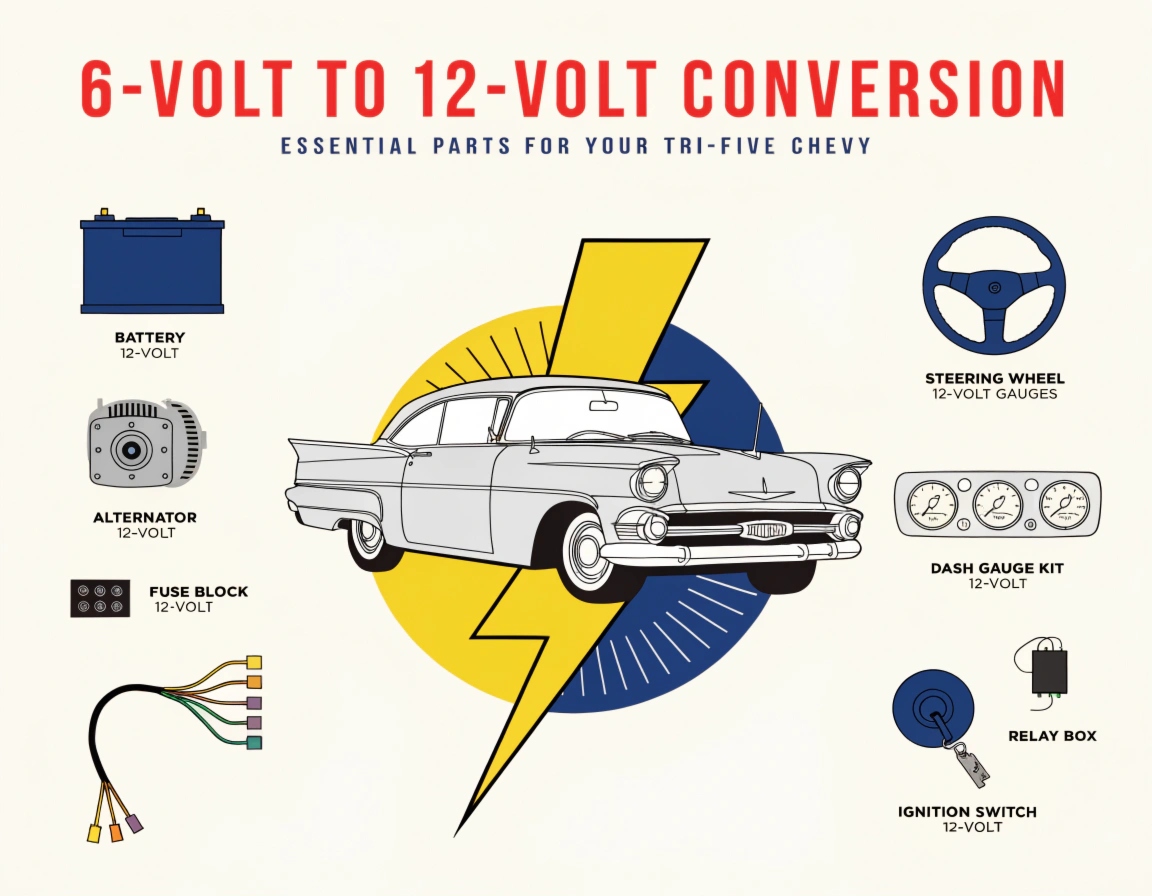
The 1955, 1956 and 1957 Chevrolets are true American icons. But while their styling is timeless, the original 6-volt electrical system can feel outdated. Dim headlights, slow cranking on a cold morning and limited options for modern accessories are common complaints.
A properly planned Tri-Five Chevy 12V conversion solves those problems and opens the door to modern reliability. If you’re considering a 1955–1957 Chevrolet electrical upgrade, this detailed 6-volt to 12-volt parts checklist will help you do it correctly while preserving factory appearance where it matters.
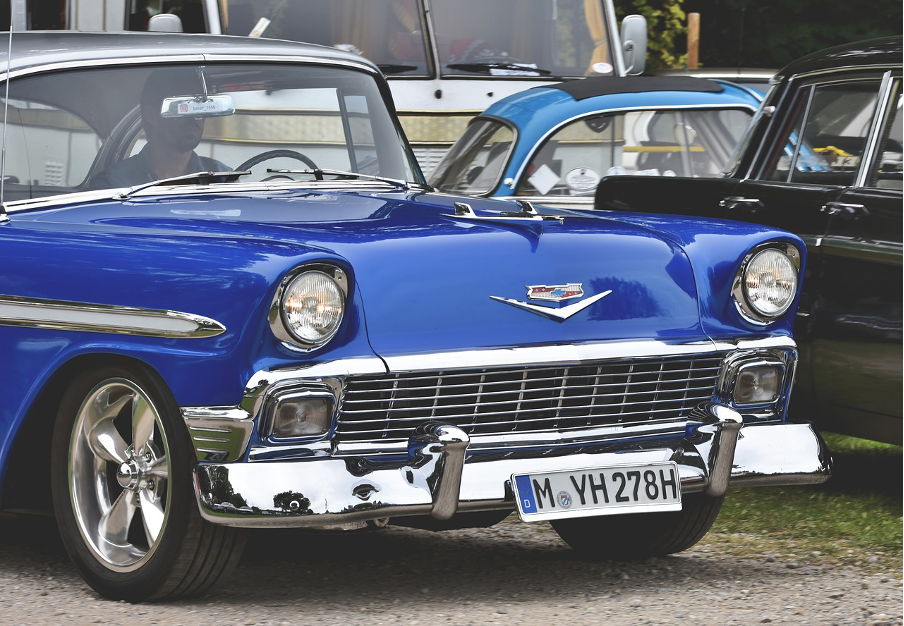
Can I keep my original 6-volt starter when converting to a 12-volt system?
In most cases, yes. According to the Tri-Five Chevy experts at Mutton Hollow Chevys, the factory 6-volt starter used in 1955–1957 Chevrolets is extremely durable. When powered by 12 volts, it spins faster, which improves starting performance. Many Tri-Five owners retain the original starter for years without issue.
That said, avoid extended cranking sessions because the higher voltage generates additional heat. Before conversion, inspect the starter drive, bushings and ring gear to ensure everything is in good condition. If the solenoid is worn, replace it during the conversion.
For stock or mildly modified engines, the original starter performs well. Only in high-compression or performance builds does a dedicated 12-volt starter become necessary.
What specific components are needed to protect my original fuel and temperature gauges?
Your original fuel and temperature gauges are 6-volt instruments. Supplying them with 12 volts will quickly damage them. Proper voltage control is essential.
A high-quality, solid-state voltage reducer designed specifically for Tri-Five applications should be installed at the instrument cluster feed. This is where a clear Tri-Five voltage reducer guide becomes critical.
Avoid simple ceramic resistors. They drop voltage but do not regulate it consistently, which leads to fluctuating gauge readings and shortened gauge life.
Solid grounding is equally essential. Poor grounds cause inaccurate readings even when the voltage is correct. If you retain the original gauges, keep the factory sending units unless you are converting to a full 12-volt aftermarket gauge set. The objective is to provide stable, regulated 6-volt power to the instruments while the rest of the car operates on 12 volts.
Is it better to use a generator-style alternator (PowerGen) or a standard 10SI/12SI alternator?
Every classic Chevy alternator swap requires choosing between factory appearance and maximum output. A generator-style alternator, such as a PowerGen unit, preserves the original engine bay look while delivering modern 12-volt charging. For restorations or period-correct builds, this option maintains authenticity without sacrificing reliability.
A Delco 10SI or 12SI alternator, however, offers higher amperage output and excellent parts availability. The 12SI is particularly well-suited for vehicles running air conditioning, upgraded audio systems, electric cooling fans or other modern accessories. The tradeoff is appearance, as these alternators are visibly different from the original generator.
Do I need to replace the entire wiring harness or just specific sections?
The answer depends on the existing wiring condition. Original 6-volt wiring is often heavier gauge because 6-volt systems draw more current. If the insulation remains flexible and intact, the factory harness can frequently be reused safely.
However, brittle insulation, cracked coverings, corrosion or poorly executed past repairs justify full replacement. Many owners use this opportunity to install a modern blade-style fuse panel for improved circuit protection.
Certain circuits almost always require attention. If you retain a points distributor, add a ballast resistor or resistance wire in the ignition feed. When upgrading to HEI ignition, provide a full 12-volt ignition feed and remove the factory resistance wire. The charging circuit wiring should also be evaluated and, as needed, upgraded to match the alternator output.
Which light bulbs and relays are mandatory replacements during the conversion process?
All 6-volt bulbs must be replaced with 12-volt equivalents. This includes headlights, taillights, brake lights, turn signals, dash illumination and interior lighting. Turn signal flashers must also be replaced with 12-volt units for proper operation.
The horn relay should be converted or replaced. While the original horns may tolerate 12 volts briefly, prolonged use without adjustment can shorten their lifespan. Heater blower motors require either a voltage reducer designed for motor loads or replacement with a 12-volt unit. Electric wiper motors follow the same rule.
Closing thoughts
A properly executed Tri-Five Chevy 12V conversion improves starting, brightens lighting and supports modern accessories while preserving character. Done right, it boosts reliability and drivability without sacrificing originality or vintage appeal.