

A marketing director in Manhattan carries a $40 backpack that looks like it belongs in a college dorm — and wonders why clients don’t take her seriously in meetings. Meanwhile, her colleague invested in a structured stylish commuter bag that transitions seamlessly from subway to boardroom, and the difference in professional perception is immediate and measurable. Choosing the right commuter bag isn’t about vanity. It’s about functionality wrapped in a design that communicates competence before you say a single word. A stylish commuter bag is a professionally designed carry solution that protects your laptop, organizes daily essentials, and maintains a polished appearance across work meetings, public transit, and travel scenarios — without sacrificing comfort during a 45-minute commute.
The professional bag market generates $18 billion annually, yet 67% of commuters report dissatisfaction with their current bag within six months of purchase, according to a 2024 consumer survey by Travel + Leisure. The problem isn’t lack of options — it’s lack of framework for evaluating what actually matters during daily use. Most buyers choose based on looks alone, then discover their bag lacks laptop protection, destroys their shoulder on long walks, or falls apart at the seams within a year. This guide gives you the exact criteria for selecting stylish commuter bags that perform as well as they look — for years, not months.
What Makes a Commuter Bag Both Stylish and Functional?
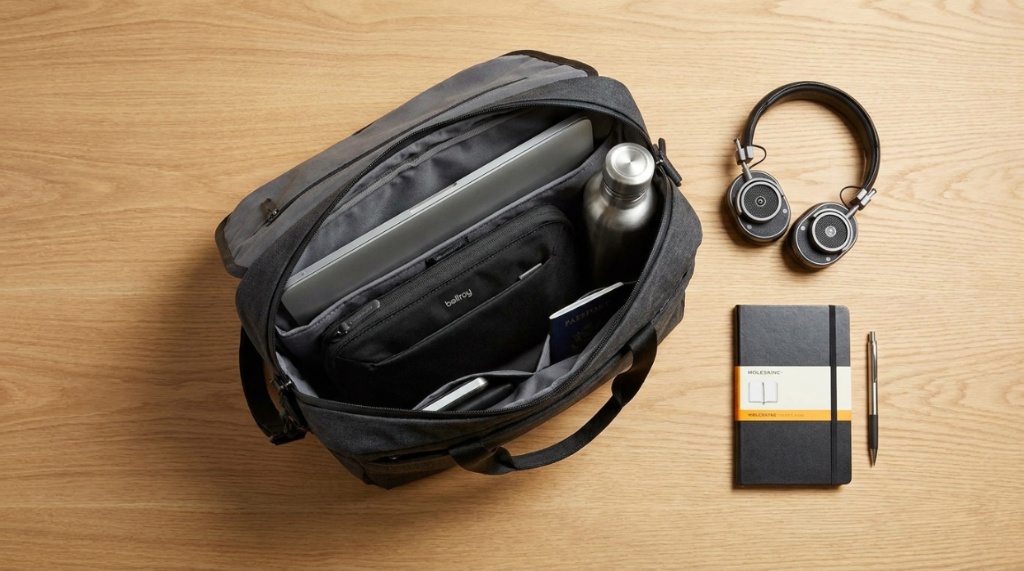
A truly stylish and functional commuter bag combines clean exterior design with intelligent interior organization, padded laptop protection, comfortable carry systems, and materials that resist daily wear without looking worn.
The five pillars of a great commuter bag:
- Exterior design: Clean lines, minimal branding, professional colorways (black, navy, charcoal, tan). Avoids sporty logos or casual aesthetics that clash with business attire.
- Interior organization: Dedicated laptop sleeve, tablet pocket, pen holders, phone pocket, key clip, and at least one quick-access external pocket for transit cards or phone.
- Material quality: Full-grain leather, ballistic nylon, or waxed canvas that develops character with age rather than deteriorating. Avoid bonded leather or thin polyester.
- Carry comfort: Padded shoulder straps (backpack), reinforced handles (briefcase), or crossbody strap with weight distribution padding (messenger).
- Durability engineering: Reinforced stress points, quality zippers (YKK or equivalent), sealed seams, and water-resistant treatment.
Which Commuter Bag Style Is Best for Your Work Environment?
Backpacks suit tech and creative industries, briefcases suit finance and law, messenger bags suit media and consulting, and totes suit fashion and design — match your bag style to your workplace culture for maximum professional impact.
Style comparison:
| Bag Style | Best Industries | Laptop Protection | Comfort (long commute) | Professional Image | Storage Capacity |
|---|---|---|---|---|---|
| Professional Backpack | Tech, startup, creative | Excellent | Excellent | Good (modern) | 25–35L |
| Briefcase/Portfolio | Finance, law, executive | Good | Fair (one hand) | Excellent | 10–20L |
| Messenger/Crossbody | Media, consulting, sales | Good | Good | Good | 15–25L |
| Structured Tote | Fashion, design, PR | Fair | Fair | Excellent | 15–30L |
| Convertible (2-in-1) | Any (versatile) | Good | Good | Good | 20–30L |
The safest choice for professionals who move between different environments: a convertible bag that functions as both a backpack and a briefcase. You wear it as a backpack during commute for comfort, then carry it by the handle in client meetings for a polished look.
What Size Commuter Bag Do You Actually Need?
Most professionals need a 20–28 liter bag that fits a 14–15 inch laptop, a change of clothes or gym gear, lunch, and daily essentials without looking overstuffed or bulky.
Size guide based on daily carry:
- Minimal carry (10–15L): Laptop, charger, wallet, phone, keys. Slim briefcase or small messenger. Best for short commutes with no gym or extra clothing needs.
- Standard carry (20–28L): Laptop, charger, notebook, lunch, water bottle, small umbrella. Professional backpack or large messenger. Covers 80% of commuters.
- Heavy carry (28–35L): All of the above plus gym clothes, shoes, or overnight travel items. Large backpack or weekender-style bag. For commuters who go straight to gym or travel frequently.
Critical measurement: verify your laptop fits before buying. Measure your laptop diagonally and add 1 inch for case clearance. A “15-inch laptop sleeve” that barely fits a 15-inch laptop without a case is useless in practice.
How Much Should You Spend on a Quality Commuter Bag?
Spend $150–$400 for a bag that lasts 5–10 years of daily use. Below $100, materials and construction degrade within 1–2 years. Above $500, you’re paying for brand prestige rather than functional improvement.
Price tier breakdown:
- Budget ($50–$100): Synthetic materials, basic organization, 1–2 year lifespan with daily use. Acceptable for occasional commuters or those testing a style before investing.
- Mid-range ($150–$300): Quality nylon or canvas, good organization, padded laptop sleeve, 3–5 year lifespan. Best value for most daily commuters.
- Premium ($300–$500): Full-grain leather or premium ballistic nylon, excellent organization, superior comfort systems, 5–10 year lifespan. Worth it for daily heavy commuters.
- Luxury ($500+): Designer brands, exotic materials, handcrafted construction. Beautiful but diminishing functional returns above $500.
Cost-per-use calculation: a $300 bag used 250 days/year for 5 years costs $0.24 per use. A $75 bag replaced annually costs $0.30 per use — and looks worse every month. Quality bags are cheaper long-term.
What Materials Last Longest in Daily Commuter Bags?
Full-grain leather and 1680D ballistic nylon are the two most durable commuter bag materials — both lasting 10+ years of daily use while maintaining professional appearance.
Material comparison:
- Full-grain leather: Develops beautiful patina with age. Water-resistant when treated. Heavy but extremely durable. Best for briefcases and structured bags. Requires occasional conditioning.
- Ballistic nylon (1680D): Military-grade abrasion resistance. Lightweight. Water-resistant. Best for backpacks and messengers. Virtually indestructible but can look “tactical” if not designed well.
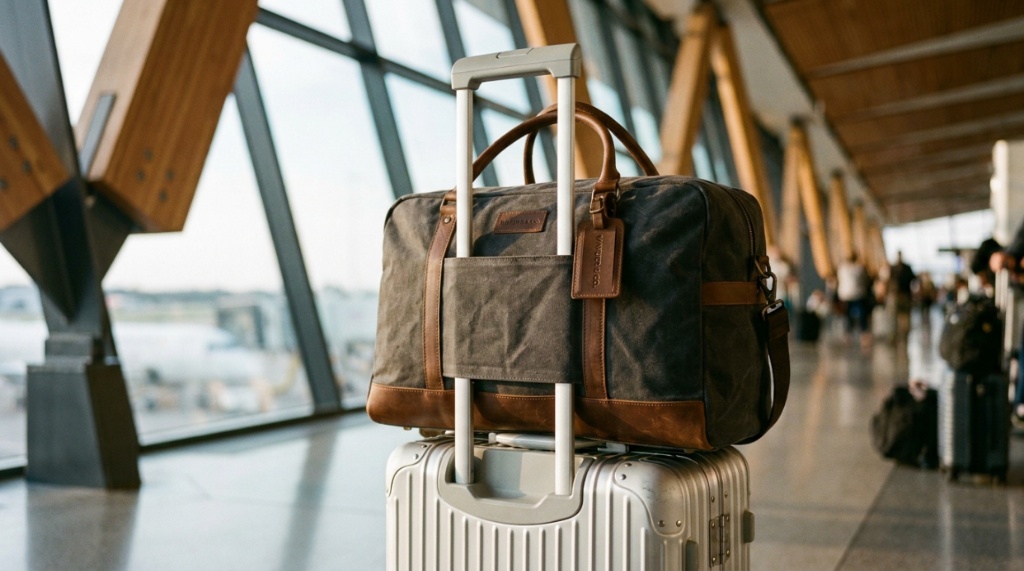
- Waxed canvas: Vintage aesthetic that improves with age. Water-resistant. Moderate weight. Best for messenger bags and totes. Needs re-waxing every 1–2 years.
- Cordura nylon (1000D): Excellent durability-to-weight ratio. Slightly less abrasion-resistant than ballistic but more flexible. Good all-around choice.
- Bonded leather (avoid): Looks like leather initially but peels and cracks within 1–2 years. Not worth any price.
- Thin polyester (avoid): Tears easily, fades quickly, looks cheap within months. Common in sub-$50 bags.
Finding the perfect balance between daily utility and high-end aesthetics is a common challenge when shopping for everyday gear. While your daily commute demands rugged organization, there are times when your wardrobe calls for pure, uncompromised elegance. If you are looking to elevate your style even further beyond the standard office cubicle, exploring why luxury handbag sellers in San Francisco continue to dominate the high-end fashion market can give you incredible insight into premium craftsmanship and timeless investment pieces that complement any professional wardrobe.
How Do You Test a Commuter Bag Before Committing?
Load the bag with your actual daily items (laptop, charger, lunch, water bottle) and wear it for 30 minutes walking. Comfort issues invisible in a 2-minute store try-on become obvious under real load and duration.
Testing checklist:
- Load test: Pack everything you carry daily. Does it fit without forcing zippers? Is weight distributed evenly?
- Laptop access: Can you remove your laptop without unpacking everything else? Quick-access laptop compartments save daily frustration.
- Pocket logic: Put your phone, wallet, keys, and transit card in their designated spots. Can you access each without looking? Muscle memory matters for daily use.
- Comfort under load: Walk 10+ minutes with full weight. Do straps dig? Does the bag bounce or swing? Does it pull your shoulders back uncomfortably?
- Professional appearance loaded: Does the bag maintain its shape when full, or does it bulge awkwardly? Structured bags look better loaded than soft bags.
- Weather test: Pour water on the exterior. Does it bead off or soak in? Daily commuters face rain regularly.
What Features Separate Great Commuter Bags from Average Ones?
Luggage pass-through sleeves, water bottle pockets that don’t bulge, magnetic closures for quick access, and hidden security pockets are the features that daily commuters appreciate most after months of use.
Underrated features worth seeking:
- Luggage pass-through: Slides over rolling suitcase handle for travel days. Essential for professionals who fly regularly.
- Magnetic snap closures: Faster than zippers for frequently accessed pockets. One-hand operation during commute.
- Load lifter straps (backpacks): Pull weight closer to your back, reducing shoulder strain on long walks.
- Ventilated back panel: Prevents the dreaded “sweaty back” during warm-weather commutes.
- Internal key leash: Clip your keys inside a pocket so they’re always findable without digging.
- Padded grab handle (top): For carrying by hand in elevators, meetings, or tight spaces where wearing the bag is awkward.
- Reflective elements: Subtle reflective strips or piping for visibility during dark winter commutes.
How Do You Maintain a Stylish Commuter Bag for Maximum Lifespan?
Clean monthly, condition leather quarterly, store stuffed with paper when not in use, and address stains immediately — these four habits double the functional lifespan of any quality commuter bag.
Maintenance by material:
- Leather: Wipe with damp cloth weekly. Apply leather conditioner every 3–4 months. Store stuffed to maintain shape. Avoid prolonged sun exposure.
- Nylon/Cordura: Spot clean with mild soap and water. Machine wash (gentle cycle, air dry) once or twice per year. Reapply DWR spray annually for water resistance.
- Canvas: Brush off dirt when dry. Spot clean with mild soap. Re-wax every 12–18 months for water resistance. Never machine wash waxed canvas.
- Zippers: Apply zipper lubricant (wax or silicone) every 6 months. Replace immediately if teeth start separating — a failing zipper destroys an otherwise good bag.
Conclusion
Choosing the best stylish commuter bag means balancing professional appearance with daily functionality — and refusing to sacrifice either one. The right bag protects your laptop, organizes your essentials, survives years of subway rides and rainstorms, and makes you look put-together without trying. It’s one of the few purchases that impacts your professional image every single workday.
Invest $150–$400 in quality materials and intelligent design. Test with your actual daily load before committing. Choose a style that matches your industry culture. And maintain it properly — a well-cared-for bag at year five looks better than a cheap bag at month five. Your commuter bag is the most-used professional accessory you own. Treat the decision accordingly.
What’s your commute like and what do you carry daily? Share the details in the comments — I’ll recommend specific bag styles and brands that match your exact needs.
Frequently Asked Questions
What is the best material for a commuter bag?
Full-grain leather and 1680D ballistic nylon are the most durable options for daily commuter bags. Leather offers timeless professional style that improves with age. Ballistic nylon provides military-grade durability at lighter weight. Both last 10+ years with proper care.
How big should a commuter bag be?
Most professionals need a 20–28 liter bag. This size fits a 15-inch laptop, charger, notebook, lunch, water bottle, and small personal items without looking overstuffed. Measure your laptop first and ensure the bag’s laptop sleeve accommodates it with 1 inch of clearance.
Are expensive commuter bags worth the price?
Bags in the $150–$400 range offer the best value — quality materials, good construction, and 5–10 year lifespans. Below $100, expect replacement within 1–2 years. Above $500, you’re paying for brand prestige with minimal functional improvement over the $300–$400 tier.
What commuter bag style is most professional?
Briefcases and structured portfolios project the most traditional professionalism (finance, law). Clean-designed professional backpacks are now widely accepted in tech, creative, and modern corporate environments. Match your bag style to your specific workplace culture.
How do I choose a commuter bag that protects my laptop?
Look for a dedicated padded laptop compartment (not just a sleeve inside the main compartment) with at least 1cm of foam padding on all sides. Suspended laptop sleeves that keep the laptop elevated from the bag’s bottom provide the best drop protection.
Can one bag work for both commuting and travel?
Yes — convertible bags and professional backpacks with luggage pass-through sleeves work for both. Look for bags in the 25–30L range with expandable compartments, shoe pockets, and the ability to slide over a rolling suitcase handle for airport use.
How often should I replace my commuter bag?
Quality bags ($200+) should last 5–10 years of daily use. Replace when zippers fail consistently, straps lose padding, or the structure collapses under normal load. If you’re replacing bags annually, you’re buying too cheap — invest more upfront for lower long-term cost.