
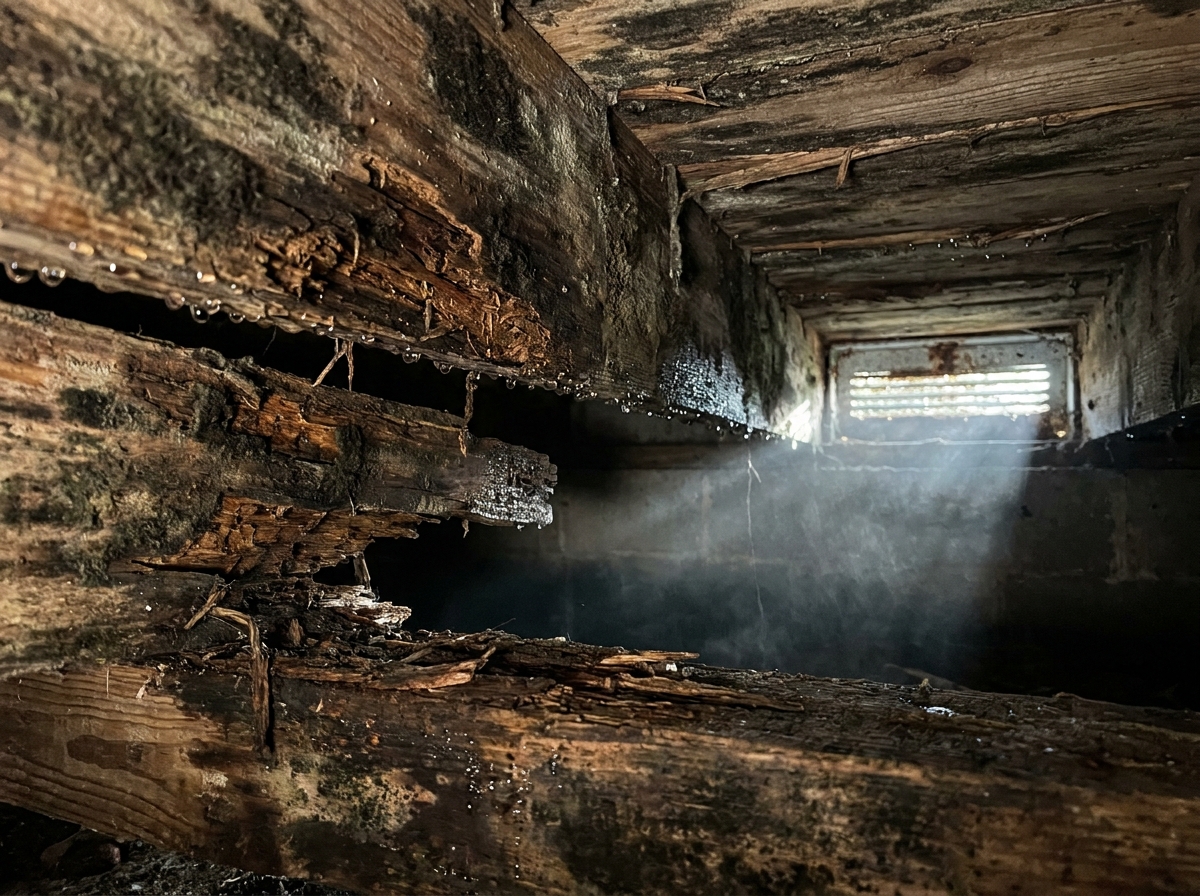
Damp air beneath a home can do more damage than many people realize. Poor crawl space ventilation allows moisture to linger around joists, beams, sill plates, and subflooring, giving wood-decay fungi the conditions they need to grow. Understanding where that moisture comes from helps explain why ventilation, drainage, and structural repairs often need to be addressed together.
Humid Outside Air Can Make a Crawl Space Wetter
Open foundation vents may seem like a simple way to dry the space, but hot, humid air can create the opposite result during warm weather. Outdoor air entering a cooler crawl space may reach its dew point and leave condensation on ductwork, plumbing, metal fasteners, and nearby lumber. Moisture then remains on surfaces that receive little sunlight or natural drying. Repeated exposure can push wood moisture levels high enough to support fungal activity, which gradually breaks down the fibers that give joists and beams their strength. Homeowners searching for crawl space repair near me may benefit from an inspection that measures humidity and wood moisture rather than assuming additional airflow will solve the problem.
Why Condensation Forms on Framing and Ductwork
Temperature differences play a major role in condensation. Cool air moving through HVAC ducts can lower the temperature of surrounding materials, while humid crawl space air stays warm and moisture-heavy. Once that air touches a colder surface, water vapor turns into droplets.
Metal ducts often show the problem first because they cool quickly. Dripping condensation can soak insulation, subflooring, and framing beneath the duct run, creating a narrow band of moisture damage that looks similar to a plumbing leak.
Careful crawl space repair contractors compare surface temperatures, air humidity, and moisture readings before recommending changes. Sealing vents, insulating ductwork, controlling air leakage, or installing a dehumidifier may reduce condensation more effectively than simply adding another vent to the foundation wall.
Exposed Soil Continually Adds Moisture to the Air
Bare ground releases water vapor into a crawl space even when no standing water is visible. Rainfall, groundwater, and naturally damp soil keep feeding moisture upward, where it becomes trapped beneath the floor system. Warm conditions speed evaporation and can raise relative humidity throughout the entire area. A properly installed ground vapor barrier reduces that source by separating the soil from the crawl space air, while drainage may be needed where water collects after storms. Property owners comparing crawl space waterproofing near me should ask whether the proposed system addresses ground vapor, bulk water, and humidity as separate problems instead of treating them as the same condition.
Wood Decay Often Starts at Hidden Bearing Points
Beam ends, sill plates, rim joists, and joist bearings can remain wetter than exposed portions of the framing. These areas often sit close to masonry or foundation walls that hold moisture and release it slowly into nearby wood.
Fungal decay can begin inside a joint where visual inspection is difficult. A beam may look solid along its center while the end resting on a pier or wall has softened enough to lose dependable bearing strength.
Probing suspicious lumber and taking moisture readings helps reveal deterioration before reinforcement begins. Providers of crawl space repair in Huntsville AL may also look closely at framing near plumbing lines, foundation vents, and exterior walls because Huntsville’s warm, humid conditions can keep those areas damp for extended periods.
Corroded Fasteners Can Signal a Larger Moisture Problem
Rust on joist hangers, nails, bolts, brackets, or support-jack hardware often indicates that crawl space humidity has remained elevated for a long time. Corrosion reduces metal thickness and can weaken the connections that transfer loads between framing members. Wood surrounding those fasteners may also be damp enough to swell, soften, or lose its ability to hold nails and screws securely. Replacing rusty hardware without correcting the moisture source can lead to the same problem again. A complete repair should evaluate both the connector and the framing it supports before new structural components are installed.
Does Poor Airflow Always Mean More Vents Are Needed?
Adding vents is not automatically the right answer. Cross-ventilation may help under certain conditions, but humid outdoor air can continue feeding moisture into the crawl space during long stretches of warm weather.
Modern moisture-control strategies may instead use sealed vents, a durable vapor barrier, controlled drainage, and mechanical dehumidification. The goal is to keep humidity within a range where condensation and fungal growth are less likely, rather than depending on unpredictable outdoor conditions.
Proper planning also considers whether HVAC equipment, duct leakage, plumbing, or exterior runoff contributes to the moisture load. Kennedy and Sons can evaluate ventilation, wood moisture, drainage, framing condition, and related crawl space concerns to identify why the area stays damp. Their team can then recommend repairs that address weakened structural materials while improving the moisture conditions that allowed decay to develop in the first place.