Living in New York comes with its own set of parenting challenges. Between navigating crowded subways, managing a career, and finding time to sleep, the last thing you need is to spend your precious downtime scrubbing bottle residue by hand. A baby bottle washer can be a game-changer, but with so many models on the market, how do you pick the right one for your apartment, your baby’s needs, and your sanity? This guide breaks down everything you need to know about selecting a baby bottle washer New York parents actually rely on, from space-saving designs to sanitizing capabilities that meet city living demands.
Key Takeaways
- New York apartments require compact, countertop-friendly designs that don’t sacrifice capacity.
- Sanitizing cycles matter more than basic washing, especially for newborns and formula-fed babies.
- Water quality and plumbing constraints in older NYC buildings should influence your choice between countertop and portable models.
- Noise levels and cycle speed are practical considerations when you’re washing bottles late at night or early in the morning.
- Look for machines with dedicated drying functions to prevent mold and mildew in humid environments.
Why a Dedicated Baby Bottle Washer Makes Sense in NYC
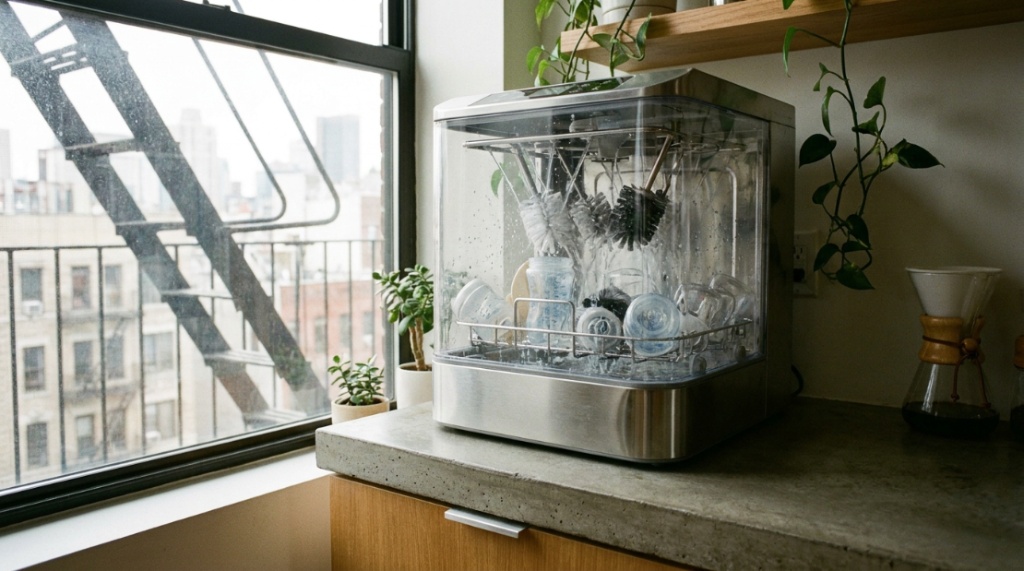
New York parents face a unique set of constraints that make dedicated bottle washers particularly appealing. Counter space is limited, sinks are often smaller than standard, and the pace of life rarely slows down. A dedicated machine doesn’t just clean bottles—it saves you time, reduces physical strain, and gives you one less thing to worry about during those exhausting early months.
Unlike hand washing, which can leave behind invisible residue or bacteria if you’re not meticulous, a bottle washer uses high-pressure water jets and high-temperature cycles to remove milk fat and formula residue more effectively. Many models also include a sanitizing stage that kills 99.9% of common bacteria, something that’s difficult to achieve with dish soap and hot water alone. For families relying on formula, where sterilization is critical, this added layer of protection is a genuine benefit.
That said, a bottle washer is not a replacement for your regular dishwasher. It’s a specialized appliance designed for the unique shapes and narrow openings of baby bottles, nipples, and pump parts. Understanding what it can and cannot do will help you set realistic expectations and choose a model that fits your actual routine.
Key Features to Look For
Not all bottle washers are created equal. The features that matter most depend on your household size, your baby’s feeding schedule, and your kitchen setup. Here’s what to prioritize when comparing models.
Sanitizing Capability
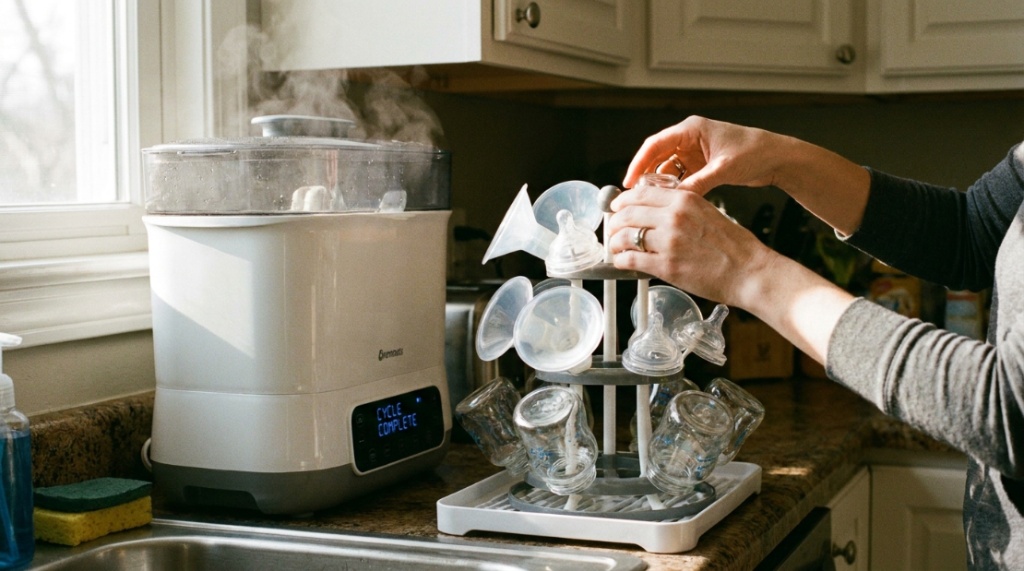
Sanitizing is the single most important feature to look for. A washer that only cleans but doesn’t sanitize leaves you with the same problem as hand washing—you’re relying on hot water and soap to do a job that requires higher temperatures. Look for models that reach at least 160°F during the sanitizing cycle. Some machines use steam, while others use high-temperature water. Both are effective, but steam-based systems tend to be gentler on silicone and plastic parts over time.
If you’re using glass bottles, high-temperature sanitizing is perfectly safe. If you’re using plastic bottles, check whether they’re BPA-free and rated for high-heat washing. Most modern bottles are, but older or cheaper brands may not be.
Drying Function
In New York’s humid summers, bottles that sit wet in a drying rack can develop a musty smell or even mold. A washer with a built-in drying cycle uses heated air to completely dry bottles, nipples, and pump parts. This is not just a convenience—it’s a hygiene feature. Without proper drying, even sanitized bottles can become contaminated within hours.
Some budget models skip the drying function, expecting you to air-dry afterward. While that works, it defeats some of the purpose of owning a dedicated machine. If you’re short on counter space and can’t leave a drying rack out, a washer with a drying cycle is worth the extra cost.
Capacity and Layout
Think about how many bottles you go through in a day. Newborns can easily use 8 to 12 bottles in 24 hours, especially if you’re exclusively formula feeding. If you’re pumping, you’ll also need to wash pump flanges, valves, and collection bottles multiple times a day.
Most countertop washers hold between 4 and 8 bottles per cycle, depending on the size and shape of the bottles. Wide-neck bottles take up more space than narrow ones. If you’re using large 8-ounce bottles, expect to run the washer more frequently. Some models come with adjustable racks or baskets that let you customize the layout, which is useful if you’re washing a mix of bottles, nipples, and small parts.
Cycle Time
Cycle times vary significantly between models. Some complete a wash-and-dry cycle in under 45 minutes, while others take over an hour. For busy parents, faster cycles mean you can wash bottles during a nap or while preparing the next feeding. However, faster cycles often use less water and lower temperatures, which can compromise cleaning effectiveness.
Look for a machine with multiple cycle options—a quick wash for lightly soiled bottles and a longer, more thorough cycle for heavily soiled ones or for sanitizing pump parts. This gives you flexibility without forcing you to wait an hour for every wash.
Space and Installation Considerations for NYC Apartments
Counter space is a premium commodity in most New York kitchens. Before you buy, measure the area where you plan to place the washer. Most countertop models are roughly the size of a large coffee maker, but some are bulkier. If you’re working with limited space, look for compact models that can fit under upper cabinets or in a corner.
Plumbing is another consideration. Some bottle washers connect directly to your kitchen faucet, while others have a built-in water tank that you fill manually. Faucet-connected models are more convenient because they use fresh water for each cycle and don’t require refilling. However, they may not be compatible with all faucet types, especially pull-out sprayers or touchless models common in newer NYC renovations.
Portable models with water tanks are more flexible—they can be placed anywhere with a power outlet and don’t require plumbing modifications. The trade-off is that you need to fill the tank before each cycle and empty the wastewater reservoir afterward. This adds a few minutes to your routine but eliminates installation concerns entirely.
Water Quality and Hard Water Issues
New York City water is generally considered high quality, but it is moderately hard in some boroughs. Hard water can leave mineral deposits on bottles and inside the washer over time. If you notice white spots on your bottles after washing, that’s a sign of hard water. Some washers include a descaling mode or come with a water filter. If not, you’ll need to run a vinegar cycle periodically to remove buildup.
If you’re using a portable model with a water tank, consider using filtered water to reduce mineral deposits. This is especially important if you’re sanitizing—minerals can interfere with the sanitizing process and leave residue on bottle nipples.
Noise Levels and Timing
In a small apartment, noise travels. A loud bottle washer running at 6 a.m. can wake your partner, your toddler, or your neighbors. Most countertop washers operate between 45 and 60 decibels, which is comparable to a normal conversation or a dishwasher. Some high-end models are quieter, but they cost more.
If you plan to run the washer overnight or during naptime, look for models with a quiet mode or a delayed start feature. Delayed start lets you load the washer, set a timer, and have it run at a time when noise is less disruptive. This is a small feature that makes a big difference in a shared living space.
Maintenance and Longevity
Like any appliance, a bottle washer requires regular maintenance to function properly. The most common issue is clogging—milk residue and formula can build up in the spray arms and filters if not cleaned regularly. Most models have removable filters that should be rinsed after every few cycles. Some also have self-cleaning modes that flush the internal lines with hot water and vinegar.
Check whether replacement parts, such as spray arms, filters, and gaskets, are readily available. Some brands sell parts directly, while others require you to go through third-party sellers. If you’re planning to use the washer for multiple children, durability matters. Look for models with stainless steel interiors or high-quality food-grade plastic that can withstand repeated high-temperature cycles.
Comparing Countertop vs. Portable Models
The choice between countertop and portable models comes down to your kitchen setup and how much hands-on involvement you want. Here’s a quick comparison to help you decide.
| Feature | Countertop (Faucet-Connected) | Portable (Water Tank) |
|---|---|---|
| Installation | Requires faucet adapter | No plumbing needed |
| Water Supply | Continuous fresh water | Manual filling per cycle |
| Wastewater | Drains into sink | Manual emptying |
| Placement Flexibility | Must be near sink | Anywhere with an outlet |
| Counter Space | Takes up permanent space | Can be stored when not in use |
| Best For | Dedicated feeding station | Small kitchens, travel, or temporary setups |
For most New York parents, a countertop model is the better long-term investment because it’s more convenient and requires less daily effort. However, if you’re in a studio apartment or plan to move frequently, a portable model offers more flexibility, If you are also upgrading your kitchen appliances for easier meal prep, you might want to check out our guide on choose affordable electric food steamers in WA.
Common Mistakes to Avoid
Choosing a bottle washer is straightforward if you know what to look for, but there are a few common pitfalls that can lead to frustration later.
Buying without measuring your space. A washer that’s too tall won’t fit under your cabinets. A washer that’s too wide will crowd your sink area. Measure twice, buy once.
Ignoring the drying function. As mentioned earlier, drying is not a luxury—it’s a hygiene feature. If you live in a humid environment or don’t have space for a drying rack, prioritize models with a built-in dryer.
Choosing a model with a tiny capacity. If you’re washing 10 bottles a day, a 4-bottle washer will require multiple cycles, which defeats the time-saving purpose. Think about your daily bottle usage before settling on a capacity.
Forgetting about pump parts. If you’re pumping, you need a washer that can accommodate flanges, valves, and collection bottles. Some models come with specialized baskets for small parts. Check the included accessories before buying.
Frequently Asked Questions
Can a baby bottle washer replace my regular dishwasher?
No. A baby bottle washer is designed specifically for the small, oddly shaped parts of bottles, nipples, and pump accessories. It uses higher water pressure and more targeted spray patterns than a standard dishwasher. While you can wash bottles in a dishwasher, a dedicated washer provides better cleaning and sanitizing for baby feeding items.
How often should I clean the bottle washer itself?
You should rinse the filter after every few cycles and run a self-cleaning or vinegar descaling cycle once a month. This prevents milk residue and mineral buildup from affecting the washer’s performance and keeps your bottles hygienically clean.
Is a bottle washer worth it for a single baby?
Yes, especially if you’re formula feeding or pumping. Even one baby generates 6 to 10 bottles per day, plus pump parts. The time saved over several months easily justifies the cost. For parents of multiples or those planning a second child, the value is even higher.
Can I wash silicone bottle nipples in a bottle washer?
Yes, most bottle washers are safe for silicone nipples. However, check the manufacturer’s instructions for your specific washer. Some high-temperature sanitizing cycles may degrade silicone over time. If you’re concerned, place nipples on the top rack or use a gentler cycle.
Do bottle washers use a lot of water?
Most countertop models use between 1 and 2 gallons of water per cycle, which is significantly less than a standard dishwasher (6 to 10 gallons). Portable models use even less because they rely on a fixed water tank. This makes them an eco-friendly choice compared to hand washing, which can waste up to 20 gallons per session.
Conclusion
Choosing the right baby bottle washer for your New York apartment comes down to three things: space, capacity, and the features that support your daily routine. Prioritize sanitizing and drying functions, measure your counter area carefully, and decide whether a faucet-connected or portable model fits your kitchen setup. A good bottle washer pays for itself in time saved, reduced stress, and the peace of mind that comes from knowing your baby’s feeding equipment is properly cleaned and sanitized. Take your time, compare a few models, and choose one that will grow with your family’s needs.