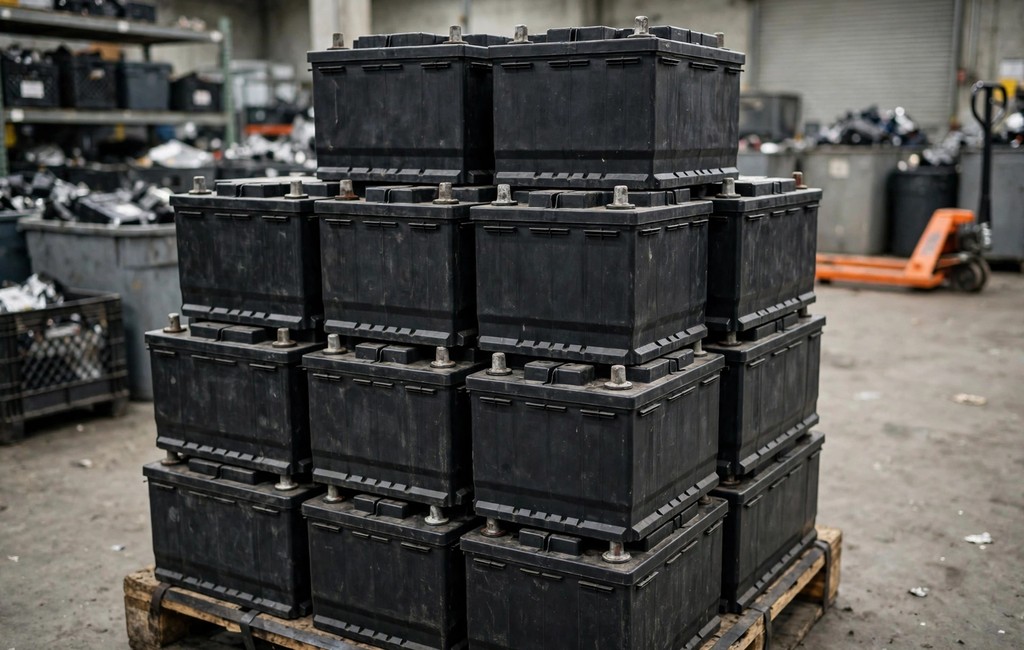
A dead car battery feels like worthless junk, yet somebody will pay you for it. The surprise is who pays more, and it is rarely the scrap yard.
Scrap battery prices depend heavily on the battery type, and the wrong assumption can cost you money or create a safety problem. This guide covers what lead-acid and lithium-ion batteries are worth, how core refunds compare, and how to handle both safely before you sell.
Which batteries have scrap value?
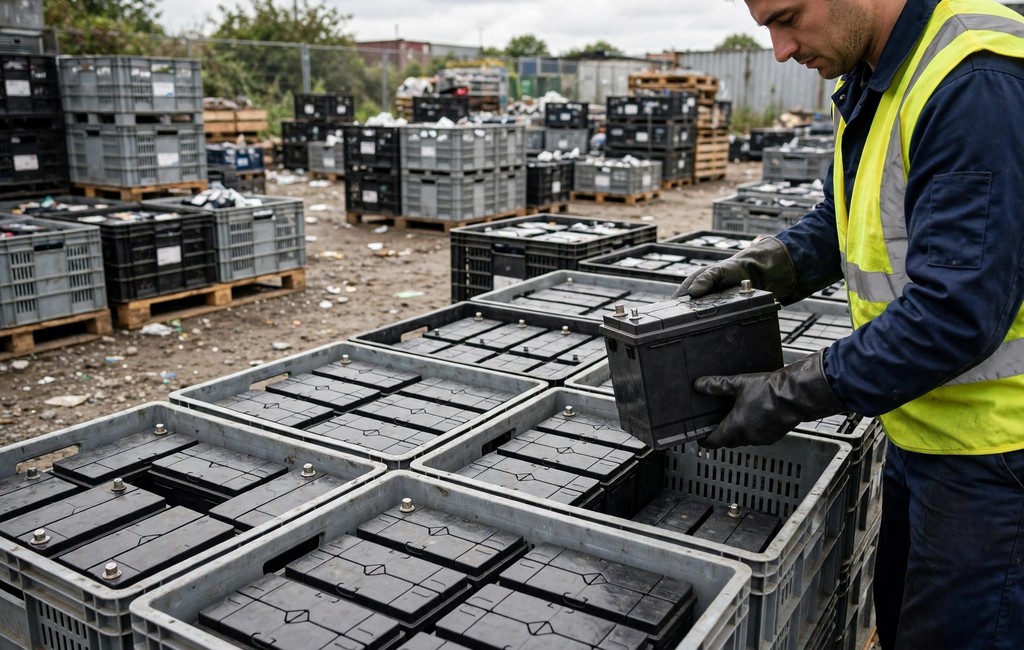
Not every battery is treated the same. Lead-acid batteries, found in cars, trucks, boats, motorcycles, and backup power systems, have the clearest market because lead is easy to recycle. Lithium-ion batteries from laptops, e-bikes, tools, and electric vehicles are different. They can contain valuable metals, but they are riskier to handle and most ordinary scrap yards do not accept them. Older nickel-based rechargeable batteries are another category with their own take-back channels.
Scrap battery prices for lead-acid batteries
Yards typically buy car batteries by weight, and the rate is low per pound, often in the range of cents to a few tens of cents depending on the market and region. A typical car battery weighs roughly 30 to 45 pounds, so a hypothetical rate of $0.20 per pound brings about $6 to $9 per battery. Larger truck, marine, and industrial batteries weigh more and earn more in total.
Prices follow the lead market, so they rise and fall over time. Some yards pay more for batteries delivered in bulk, and a few pick up pallets from garages and shops.
Core charge versus scrap price
Here is where many people leave money behind. When you buy a new car battery, the seller usually adds a refundable core charge. Return your old battery to the same store, or sometimes any store that sells them, and you receive that money back. Depending on your location, the core refund can exceed the scrap rate. If you are buying a replacement anyway, compare both options before selling the old one to a yard.
Rules vary by state and retailer, so ask at the counter. If you already threw the receipt away, many stores will still accept the core and issue a credit.
Why do online prices disagree?
Some pages quote per-pound yard rates, others quote per-battery prices, and still others quote industrial prices in tonnes. A few mix in the value of new batteries. Each number is correct for something, but only the posted rate at a nearby buyer matters when you sell. Always check the unit, the battery type, and the date.
Handling lead-acid batteries safely
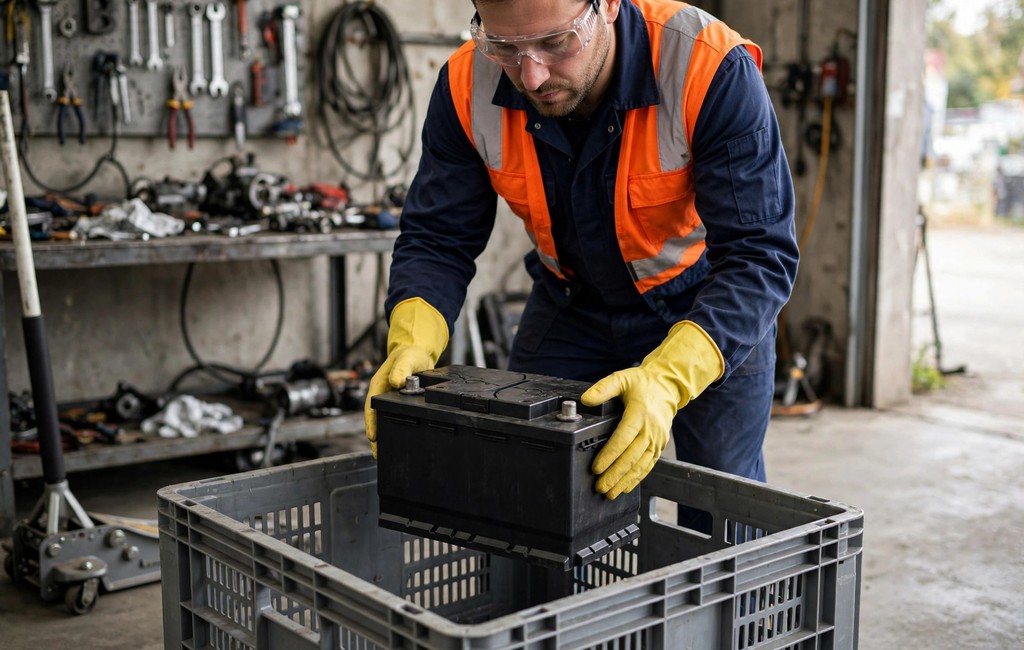
- Keep them upright: Tipping can spill sulfuric acid, which burns skin and damages clothing and surfaces.
- Never drain the acid: Pouring it out is dangerous and illegal in many places. Yards accept sealed, intact batteries.
- Wear protection: Gloves and eye protection are the minimum when moving them.
- Avoid cracked batteries: Call the buyer first. Leaking units may require special handling.
- Transport securely: Use a plastic tray or box and strap them down so they cannot slide.
Lithium-ion batteries are different
Do not sell lithium-ion batteries the same way. Damaged, swollen, or punctured cells can overheat and ignite, which is a real fire risk in a vehicle or garage. Most ordinary scrap yards decline them. Instead, look for retailer drop-off programs, municipal hazardous waste events, or specialized battery recyclers. Programs such as Call2Recycle list drop-off locations for many rechargeable batteries in North America.
If a lithium battery is swollen or damaged, keep it in a non-flammable container away from combustibles, and contact a professional recycler for instructions. Do not charge or puncture it. Tape the terminals of loose cells to prevent short circuits.
How to get the most from a battery sale
Treat batteries like any other scrap and shop around. Call two yards and one battery recycler, and ask whether they pay differently for car, truck, and deep-cycle units. Bring several batteries at once, since a few buyers set minimums or offer better rates for volume, and some will pick up pallets from garages and repair shops. Keep a record of what you sold and the date, particularly if you run a business, because regulations on used batteries often require documentation. Finally, store old batteries upright in a dry, ventilated spot away from children and pets until you are ready to move them, and never stack them where they can tip or touch metal tools.
Frequently asked questions
How much is a scrap car battery worth?
Usually a few dollars to around ten dollars, depending on weight and the yard’s current rate. A core refund from a retailer may be higher.
Is it better to return a battery for the core charge?
Often, yes, when you are buying a replacement. Compare the refund with the scrap value and choose the larger amount.
Do scrap yards buy lithium-ion batteries?
Most ordinary yards do not. Use specialist recyclers or retail drop-off programs designed for these batteries.
Can I take a leaking battery to the yard?
Call first. Leaking batteries are hazardous, and some buyers have specific rules or decline them.
Are old batteries regulated?
In many places, yes. Used lead-acid batteries often fall under hazardous or universal waste rules, so check your local regulations before disposal.
Next step
Identify your battery type, then compare three options: the core refund, the yard rate, and a take-back program. Tell us in the comments what battery you are trying to move, and we will point you toward the safest option. Subscribe for more practical recycling guides.