
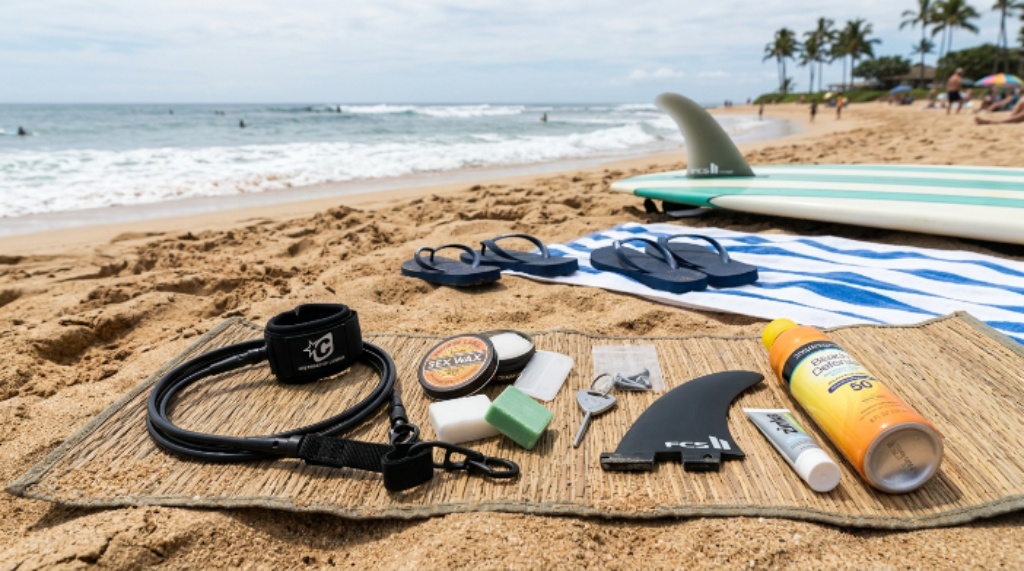
Surfing is more than a sport. It is a lifestyle. Whether you are a beginner just catching your first waves or a seasoned rider chasing big swells, having the right gear makes every session better. However, many surfers overlook the importance of a well-stocked accessories kit. They focus only on the board itself and forget everything that supports it.
This guide walks you through everything you need to build the perfect surfboard accessories kit. From wax to leashes, each item plays a role in your safety and performance on the water.
Why a Complete Accessories Kit Matters
A surfboard alone will not get you far. The ocean is unpredictable, and your gear needs to match that reality. A complete kit protects your board, keeps you safe, and improves your overall experience in the water.
Additionally, having the right accessories saves you money in the long run. Replacing a damaged board is costly. Proper care tools help you avoid that expense. Therefore, investing in a solid kit from the start is always a smart move.
The Core Items Every Surfer Needs
Surfboard Leash
The leash is one of the most important pieces of must-have surf gear you will ever buy. It attaches your ankle to the board and keeps it from drifting away after a wipeout. Without a leash, your board becomes a hazard to you and other surfers.
Choose a leash that matches your board length. A 6-foot board needs roughly a 6-foot leash. Longer leashes create more drag, while shorter ones can snap back too fast. Always check for wear and tear before each session. Replace it at the first sign of cracking or fraying.
Surfboard Wax
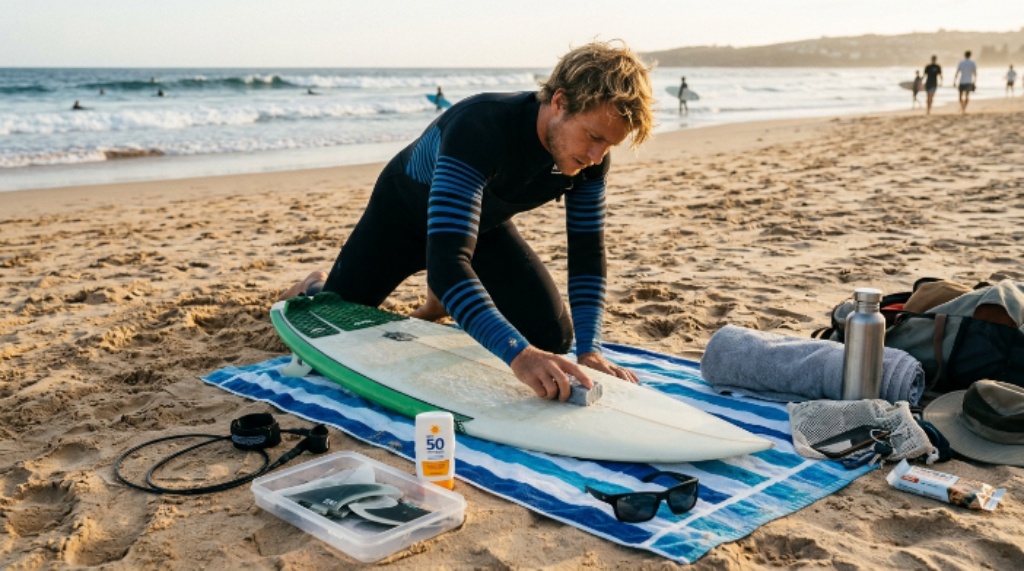
Wax gives your feet grip on the board. Without it, you will slide right off every time a wave hits. There are different types of wax for different water temperatures. Cold water wax is softer. Warm water wax is harder. Using the wrong type means losing traction fast.
Apply a base coat first. Then add a top coat in a crosshatch pattern. This simple step improves your grip significantly. Additionally, carry a wax comb to refresh the texture mid-session when the wax gets too smooth.
Fin Set and Fin Key
Fins control how your board handles in the water. They affect speed, direction, and stability. Most boards come with fins, but having a backup set is wise. Fins can loosen, get lost, or simply wear out.
A fin key is the small tool that tightens or removes fins. It is tiny, but it is essential. Losing a fin mid-surf can ruin your session entirely. Therefore, always keep a fin key in your bag.
Protection and Care Essentials
Board Bag or Sock
A board bag protects your surfboard from dings, UV damage, and temperature changes. A sock is a lightweight sleeve that works well for short trips. A full bag with padding is better for travel or long-term storage.
UV exposure degrades the resin on your board over time. Even a simple sock extends the life of your board noticeably. This is one of those beach essentials that many beginners skip but always regret later.
Ding Repair Kit
Dings happen. It does not matter how careful you are. A small crack or dent left unrepaired can absorb water and cause serious structural damage. A basic ding repair kit includes resin, hardener, and sandpaper.
There are also quick-fix options like UV-cure resin, which sets in sunlight within minutes. However, for deeper dings, a proper epoxy repair is better. Keep a kit in your car or bag so you can patch things up right away.
Nose and Tail Guards
Nose and tail guards are rubber protectors that fit over the tips of your board. They absorb impact and reduce the chance of snapping a nose or cracking a tail. They are especially useful during transport and storage.
Additionally, a cracked nose is a safety risk. It becomes sharp and can injure you or another surfer. Guards are inexpensive and easy to apply, so there is no reason to skip them.
Personal Safety and Comfort Items
Sunscreen
Sun protection is non-negotiable. Hours in the water mean hours of sun exposure, even on cloudy days. Use a reef-safe, water-resistant sunscreen with at least SPF 50. Apply it 20 minutes before entering the water.
Many surfers get so focused on the waves that they forget reapplication. Set a reminder on your phone if needed. Sunburn can sideline you for days, so this is one of the most critical beach essentials to pack.
Wetsuit or Rash Guard
A wetsuit keeps you warm in cold water. A rash guard protects your skin from sun, wind, and friction in warmer conditions. Both serve a purpose depending on your location and the season.
Rash guards also prevent irritation from rubbing against the board. Over a long session, that friction adds up. Therefore, even on warm days, a rash guard is worth wearing.
Earplugs
Surfer’s ear is a real condition. Cold water and wind cause abnormal bone growth in the ear canal over time. This leads to hearing loss and infections. Wax or silicone earplugs made for surfers help prevent this.
They are small and affordable. However, the protection they offer is significant. Make them a standard part of your kit, especially if you surf in cold or windy conditions regularly.
Convenience and Organization
Waterproof Bag or Dry Sack
Keeping your phone, keys, and wallet dry is a constant challenge at the beach. A waterproof bag or dry sack solves this problem. Look for one with a roll-top closure and a carrying strap.
Some surfers use waterproof phone cases that allow them to attach their phone to their board for filming. Whatever option you choose, protecting your valuables from water and sand is always a priority.
Traction Pad
A traction pad is a foam grip pad that sticks to the tail of your board. It replaces wax on the back foot area and provides consistent grip. Many surfers prefer pads over wax because they require less maintenance.
Pads come in different thicknesses and shapes. Some have a raised kick tail that helps you feel where your foot is positioned. This feature is especially useful when surfing in fast or powerful waves.
Board Rack or Wall Mount
When you are not in the water, your board needs a proper place to rest. Leaning it against a wall damages the rails over time. A board rack or wall mount keeps it safe and out of the way.
Freestanding racks work well in garages or sheds. Wall mounts save space and look clean in a room. Either way, storing your board correctly extends its life considerably.
Building Your Kit on a Budget
You do not need to buy everything at once. Start with the essentials: a leash, wax, a fin key, and sunscreen. Add protection items like a board bag and ding repair kit next. Then build out the comfort and organization layer over time.
Look for bundles at surf shops. Many retailers offer starter kits that include several of these must-have surf gear items at a discount. Second-hand stores and online marketplaces are also great sources for quality gear at lower prices.
Conclusion
Building the perfect surfboard accessories kit does not have to be complicated. Start with safety and performance. Add protection and care. Then layer in comfort and convenience as your budget allows.
A leash keeps your board close. Wax and traction pads keep your feet planted. A ding repair kit protects your investment. Sunscreen and a rash guard protect your body. Together, these items form a complete system that supports every session you paddle out for.
The ocean rewards those who are prepared. So take the time to assemble your kit carefully. Your surfing experience will be better for it.
Frequently Asked Questions
What is the most important accessory for a beginner surfer?
A leash is the single most important accessory. It keeps your board attached to you after a fall, preventing it from hitting other surfers or drifting away in strong currents.
How often should I replace my surfboard leash?
Inspect your leash before every session. Replace it if you notice any cracks, kinks, or weak spots in the cord. As a general rule, a leash used regularly should be replaced every 12 to 18 months.
Do I need a wetsuit if I surf in warm water?
Not necessarily. In warm water, a rash guard is usually enough. It protects your skin from sun exposure and board friction without the bulk of a wetsuit.
Can I use regular sunscreen while surfing?
You can, but reef-safe sunscreen is strongly recommended. Many destinations now ban chemical sunscreens to protect coral reefs. Choose a mineral-based SPF 50 formula for best results.
Is a traction pad better than surfboard wax?
It depends on preference. Traction pads offer consistent grip and require no maintenance. Wax is cheaper and covers the entire board. Many surfers use a combination of both for maximum control.
Related Topics:
How to Choose a Putter That Improves Distance Control
How to Pick Affordable Fishing Rod Combos Without Losing Quality