You’re standing in the swimwear aisle, sunscreen in hand, staring at two racks of tops that look almost identical. On one side, a rash guard. On the other, a swim shirt. You need sun protection, you want to be comfortable, and you don’t want to waste money on the wrong thing.
The problem is, the labels are vague, the marketing is confusing, and you’re left guessing which one actually suits your lifestyle. Whether you’re surfing waves, lounging poolside, or chasing toddlers at the beach, the choice between these two garments comes down to performance, fabric, and fit. In this guide, we break down every difference between women’s rash guards swim shirts so you can buy with confidence and stay protected all summer long.
What Is the Main Difference Between a Rash Guard and a Swim Shirt?
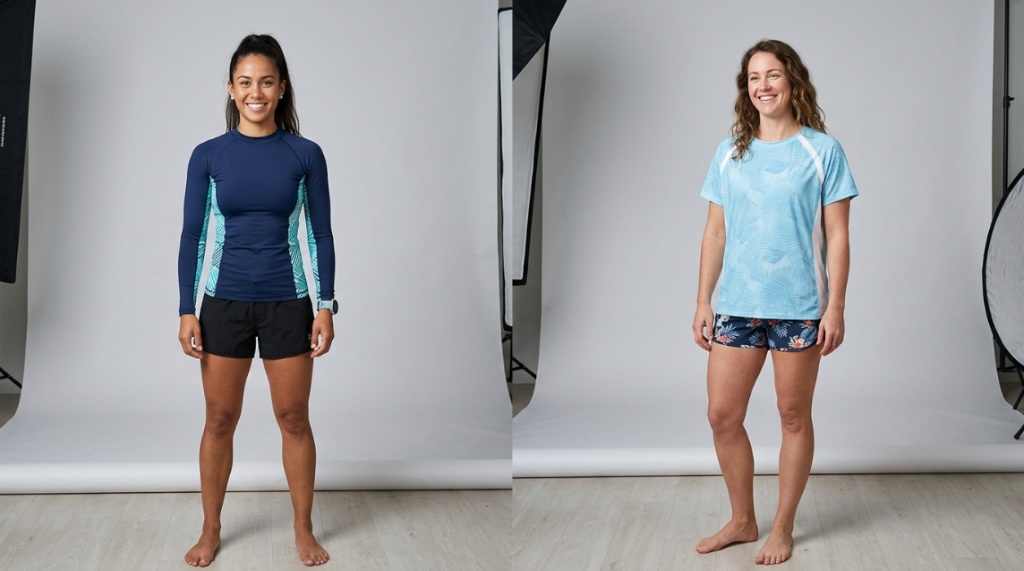
A rash guard is a snug, performance-oriented top originally designed for surfers to prevent chafing from wax and boards. A swim shirt is a looser, casual top meant for general water activities and sun protection. The key difference lies in fit, fabric compression, and intended use.
Rash guards typically feature a tight, second-skin fit that reduces drag in the water and stays put when you’re diving under waves. They are made from high-performance synthetic blends like nylon-spandex or polyester-elastane, which offer four-way stretch, quick drying, and serious durability against chlorine and saltwater. Swim shirts, on the other hand, often have a relaxed or boxy cut. They prioritize comfort and coverage over compression, making them ideal for kayaking, paddleboarding, or casual beach days where you don’t need a performance fit.
Fabric and Construction
Rash guards often feature flatlock seams to prevent chafing, while swim shirts may use standard overlock stitching. Rash guards also tend to be thicker and more resistant to pilling. If you plan to surf, paddle hard, or swim laps, a rash guard handles the abrasion better. For lounging or light activity, a swim shirt offers plenty of protection without the tight feel.
Which One Offers Better Sun Protection (UPF Rating)?
Both garments can offer excellent UPF protection, but rash guards generally maintain their UPF rating longer due to tighter weaves and durable fabrics. Look for a UPF 50+ rating on either option for the best defense against UVA and UVB rays.
The sun protection factor of a swim top depends on the fabric’s weave, color, and thickness. A dark, tightly woven rash guard with UPF 50+ blocks 98% of UV radiation. Swim shirts can achieve the same rating, but their looser weave may degrade faster with repeated wear and washing. Always check the tag for a stated UPF rating rather than relying on vague claims like “sun protective.”
How to Maximize UPF Lifespan
- Rinse in cold water immediately after saltwater or chlorine exposure.
- Hand wash or use a delicate cycle with mild detergent.
- Never bleach or use fabric softeners, which break down elastane.
- Air dry away from direct sunlight to prevent fabric degradation.
A rash guard that is properly cared for can maintain its UPF rating for multiple seasons, while a swim shirt may start to lose effectiveness after one heavy summer.

When Should You Choose a Rash Guard Over a Swim Shirt?
Choose a rash guard when you need mobility, durability, and protection from chafing during high-intensity water sports. If you surf, wakeboard, kiteboard, or swim competitively, the tight fit prevents fabric from billowing and creating drag.
Rash guards excel in situations where you are repeatedly making contact with your board, the water surface, or other equipment. The flatlock seams reduce irritation under wetsuits or when paddling. Additionally, if you have sensitive skin or are prone to sunburn, the compression fit ensures the fabric stays against your skin, leaving no gaps for UV exposure.
Real-World Example
Imagine you are surfing for two hours. A swim shirt will ride up, hold water, and chafe your underarms. A rash guard stays in place, dries quickly between waves, and prevents the dreaded “surf rash” on your torso and arms. For any activity where you are actively moving against resistance, a rash guard is the superior choice.
When Is a Swim Shirt the Better Option?
A swim shirt is the better option for casual beach days, family outings, and situations where you prioritize comfort and ease of movement over compression. If you are paddleboarding, snorkeling, or playing beach volleyball, the looser fit feels less restrictive.
Swim shirts are also more forgiving for different body types. Someone who prefers a relaxed silhouette or needs extra room in the midsection will find swim shirts more comfortable. They are also easier to put on and take off when wet, which is a big plus for kids or anyone with limited mobility.
When to Avoid a Swim Shirt
- Intense surfing or bodyboarding (risk of chafing and bunching).
- Long swim sessions (fabric holds more water, causing drag).
- Activities where you need a secure fit under a wetsuit (swim shirts can shift).
How Do Fit and Comfort Compare Between the Two?
Rash guards offer a compressive, supportive fit that many women find flattering and secure. Swim shirts offer a relaxed, airy feel that prioritizes breathability and freedom. Your choice depends on personal preference and activity level.
Fit is the most subjective difference. A rash guard should fit like a second skin—snug but not restrictive. You should be able to move your arms freely without the fabric pulling at the shoulders. If you can pinch more than an inch of fabric at your waist, it is too loose. Swim shirts, by contrast, should fit comfortably without being baggy. A swim shirt that is too large can fill with water and become heavy, which is unpleasant and potentially unsafe in deep water.
Size Guide Quick Reference
| Fit Factor | Rash Guard | Swim Shirt |
|---|---|---|
| Compression | High (snug) | Low (relaxed) |
| Arm Mobility | Excellent (engineered stretch) | Good (looser cut) |
| Water Drag | Minimal | Moderate |
| Ease of Dressing | Moderate (tight fit) | Easy (loose fit) |
Can You Wear a Rash Guard for Casual Swimming or a Swim Shirt for Surfing?
Yes, you can wear either for most water activities, but performance and comfort will suffer if you use the wrong one for your main activity. A swim shirt works for casual swimming, but a rash guard will perform poorly if you want a relaxed, non-compressive feel.
If you wear a rash guard for casual swimming, you will enjoy excellent sun protection and freedom from chafing, but the tight fit might feel unnecessary for floating or gentle paddling. Conversely, wearing a swim shirt for surfing means you risk fabric bunching, chafing under your arms, and reduced mobility when paddling out. Stick to the intended design for the best experience.
Which One Is More Durable and Long-Lasting?
Rash guards are generally more durable and long-lasting because they use higher-density fabrics, reinforced seams, and compression-grade elastane. A quality rash guard can last two to three seasons with proper care, while a swim shirt may show signs of wear after one season.
The durability difference comes down to construction. Rash guards are built to withstand aggressive activity, constant stretch, and exposure to harsh elements. Swim shirts are often made with lighter, less expensive materials that prioritize cost and comfort over longevity. If you swim frequently or spend entire summers at the beach, investing in a rash guard saves money in the long run.
Signs of Wear to Watch For
- Loss of elasticity (fabric no longer snaps back)
- Fading or thinning of fabric (reduced UPF protection)
- Seams unraveling or pilling
- Stretching out of shape after washing
How to Choose Between a Rash Guard and a Swim Shirt Based on Your Body Type
Consider your body type and comfort preferences. Rash guards flatter athletic and hourglass figures with their compression fit, while swim shirts accommodate a wider range of shapes, including those who prefer a looser fit around the midsection or hips.
Rash guards with longer torsos are available for women who need extra length. Look for “tall” or “long” sizes if you find standard lengths ride up. Swim shirts often come in plus sizes and tunic lengths, making them more inclusive for pear-shaped or apple-shaped body types. Always check the size chart and customer reviews for fit guidance, especially if you are between sizes.
Do You Need a Rash Guard or Swim Shirt for Water Sports Other Than Surfing?
Yes, both are excellent for kayaking, paddleboarding, snorkeling, sailing, and wakeboarding. The choice depends on the intensity of the activity. For high-motion sports, choose a rash guard. For low-impact activities, a swim shirt works fine.
Snorkeling and scuba diving benefit from a rash guard because it provides a barrier against stings from jellyfish and coral, and the tight fit prevents sand from getting trapped. For kayaking, a swim shirt’s looser fit offers better ventilation on hot days. Sailors often prefer rash guards because they dry quickly and don’t flap in the wind.
What Are the Best Affordable Options for Women’s Sun Protection Swim Tops?
Affordable options exist in both categories, but the best value often comes from brands that specialize in performance swimwear. Look for sales on reputable brands or explore lesser-known labels that use quality fabrics. For a curated list of budget-friendly picks, check trusted resources that compare women’s rash guards swim shirts side by side.
When shopping on a budget, prioritize UPF rating and fabric composition over brand name. A $25 swim shirt with UPF 50+ and a good fit is a better buy than a $50 rash guard with a UPF 30 rating. Also, consider buying during end-of-season sales for maximum savings.
How to Care for Your Rash Guard or Swim Shirt to Extend Its Life
Rinse thoroughly with fresh water after each use, hand wash with mild soap, and hang to dry away from direct heat. Never wring out the fabric, and avoid washing with towels or items that have zippers or velcro.
Chlorine and saltwater are the biggest enemies of elastane fibers. Even a quick rinse can double the lifespan of your garment. For deeper cleaning, use a gentle detergent designed for activewear. Avoid bleach, fabric softeners, and dryers, as they degrade the elastic and reduce UPF effectiveness.
Care Do’s and Don’ts
- Do: Rinse immediately after use.
- Do: Wash on a delicate cycle in cold water.
- Don’t: Use fabric softeners or bleach.
- Don’t: Tumble dry or iron.
- Don’t: Soak for extended periods.
Frequently Asked Questions
Can I wear a rash guard in a pool?
Yes, rash guards are excellent for pool use. They protect against chlorine and provide sun protection. Just rinse thoroughly after swimming to prevent chlorine damage.
Is a swim shirt the same as a UV shirt?
Not always. A swim shirt is a general term for a top worn in water, while a UV shirt specifically refers to a garment with a rated UPF. Always check for a UPF label to ensure sun protection.
Do rash guards keep you cooler in the sun?
Yes, because they block UV rays and wick moisture away from the skin. The tight fit can feel warmer initially, but the breathable fabric helps regulate temperature better than bare skin in direct sun.
Can I wear a rash guard under a wetsuit?
Absolutely. Rash guards are designed for this purpose. They prevent chafing from the wetsuit and add an extra layer of warmth and sun protection when you remove the wetsuit.
Are swim shirts good for kids?
Yes, swim shirts are great for kids because they are easy to put on, comfortable, and offer sun protection. Look for styles with long sleeves and high collars for maximum coverage.
How often should I replace my rash guard or swim shirt?
Replace your garment when it loses elasticity, the fabric thins, or the UPF rating is compromised. For frequent users, this is typically every one to two seasons.
Which is better for snorkeling: rash guard or swim shirt?
A rash guard is better for snorkeling because it stays in place, prevents chafing from fins and mask straps, and offers a barrier against stings or scrapes from coral.
Because rash guards are designed with a tight, second-skin fit, they prevent your skin from rubbing against your surfboard or bodyboard. If you choose a loose swim shirt instead, the shifting fabric combined with salt and sand can cause severe skin irritation. Knowing how to choose the right fit is just as important as learning how to prevent chafing while surfing.”
Conclusion
Choosing between a women’s rash guard and a swim shirt ultimately comes down to how you plan to use it. If you surf, paddle hard, or need a durable, high-performance top that stays put, invest in a quality rash guard. If your beach days are more about relaxing, casual swimming, or family fun, a comfortable swim shirt offers excellent sun protection without the compression. Either way, prioritize UPF 50+ protection, proper fit, and fabric quality. Now that you understand the differences, you can confidently pick the right top for your next water adventure. Shop smart, stay protected, and enjoy every moment in the sun.